A baby boy valentines outfit does not need a giant heart, a stiff collar, or a costume-like slogan to feel special. The loveliest clothes for February are often quieter: a washed red knit, a cream shirt with a rounded collar, or tiny corduroy trousers in the color of raspberry jam. Valentine’s Day gives us a reason to notice color and texture, but the child should remain the most interesting thing in the room.
When I styled the children’s floor at Nordstrom, I learned to look first at proportion and hand-feel. Babies spend much of the day being held, crawling, kicking, and discovering their own sleeves. A beautiful outfit has to accommodate all that movement. Think of this as a small composition rather than a themed uniform: one expressive color, one soft texture, and enough simplicity for your child’s personality to come through.
Start with comfort, then choose the mood
For a baby boy valentines outfit, fabric is the first decision. Cotton jersey, brushed French terry, fine-gauge knit, and soft cotton corduroy are dependable choices because they move easily and tolerate the practical realities of infancy. Look for flat seams, covered snaps, and waistbands that stretch without pressing into the stomach. A garment that photographs beautifully but leaves red marks around the neck has missed the point.
Color can carry the feeling without announcing the holiday too loudly. Tomato red feels energetic; dusty rose is softer and looks beautiful against warm skin tones; burgundy has the depth of a library chair. If red feels too direct, try plum, clay, faded pink, or a small accent of coral. Cream, oatmeal, navy, and moss give these shades somewhere to rest. In natural light, a muted red often reveals more character than a bright primary one.
A simple base makes dressing easier. Start with a long-sleeved bodysuit or henley, add pull-on pants, and finish with a cardigan if the day is cool. For a baby who dislikes layers, choose a one-piece romper with a generous opening at the bottom. The best version is the one you can change quickly after lunch without dismantling the whole outfit.
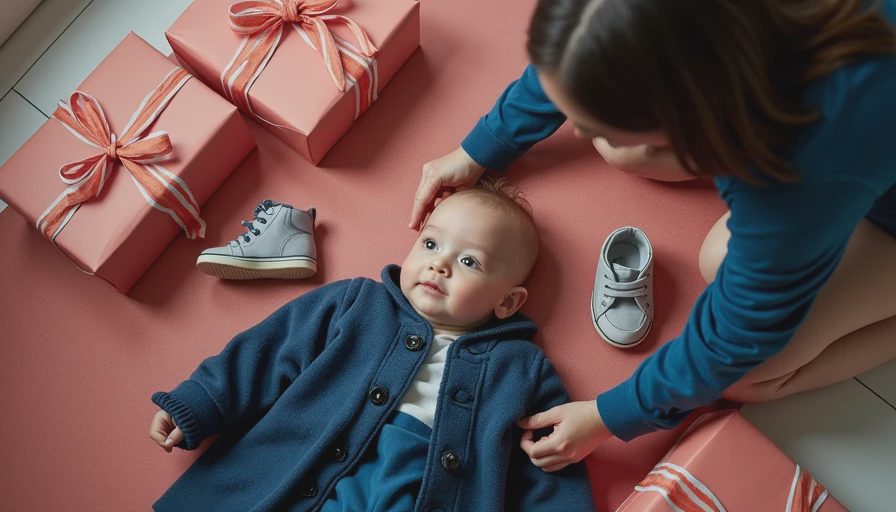
Three thoughtful outfit directions
The first direction is storybook classic. Pair a cream knit top with cranberry corduroy pants and oatmeal socks. A tiny embroidered heart at the chest is enough decoration. The colors recall an old picture-book illustration without making your child look like a character in a retail display. This combination works especially well for a family lunch or a portrait near a window.
The second is soft and modern. Try a faded raspberry sweatshirt with natural canvas pants or cocoa leggings. Look for a sweatshirt with a gently curved hem and no scratchy interior label. This baby boy valentines outfit has a relaxed shape that suits floor play, and the color does the festive work. Add a knitted bonnet or a ribbed beanie only if your child enjoys wearing one; accessories should never become a wrestling match.
The third direction uses pattern sparingly. A striped Breton-style top in cream and red can sit beneath navy overalls, or a tiny floral-print shirt can peek from a solid cardigan. Pattern is most successful when it has breathing room. If the shirt is busy, let the bottoms be plain. If the pants have a bold weave, choose a quiet top. Children’s clothes are small canvases, and a little restraint lets each detail be seen.
Building a baby boy valentines outfit from what you own
You probably have the beginning of a baby boy valentines outfit already. Open the drawer and pull out the pieces your child reaches for repeatedly: the soft gray sweatshirt, the pants with a forgiving waistband, the cardigan that has survived several washes. Then add one Valentine note rather than replacing everything. A red sock, a rose-colored bib, or a heart-shaped wooden button can shift the entire feeling.
This approach is kinder to your budget and more faithful to personal style. A new item should earn its place by working beyond February. A burgundy cardigan can layer over denim in March and over a striped tee in autumn. Cream trousers can accompany a blue oxford shirt, a graphic tee, or a sweatshirt with a hand-painted-looking print. When I buy for a child, I ask how many different stories the garment can enter.
Pay attention to scale. A large graphic can overwhelm a small body, while a narrow stripe or petite motif tends to feel more considered. This is not a rule about what a child should wear; it is simply a way to understand visual balance. Some children love a bold heart across the chest. Others seem happier in a quiet knit. Both choices are valid when the child can move, rest, and play comfortably.
Details that make photographs feel natural
A baby boy valentines outfit photographs best when it belongs to the setting. Choose a soft blanket, a wooden chair, or a sunny patch on the floor rather than a crowded backdrop of balloons. Natural light shows the difference between cotton and polyester, between true red and orange-red. It also captures the small gestures that make a photograph feel alive: a curled toe, a hand gripping a sleeve, a serious look followed by a sudden laugh.
Before taking pictures, remove anything that pinches or twists. Check the neckline while your child is sitting, not only while standing. Make sure suspenders, if used, are adjusted gently and that hats do not cover the eyes. Keep a backup top nearby; babies have a talent for turning a carefully planned portrait into an honest record of the afternoon.
For a polished but unforced frame, place the strongest color near the face and keep the lower half calm. A red cardigan over cream creates a clear focal point. A patterned top with denim feels more playful. If you want a little sparkle, use the setting instead: paper flowers, a painted card, or a bowl of citrus on the table can bring warmth without adding uncomfortable accessories.
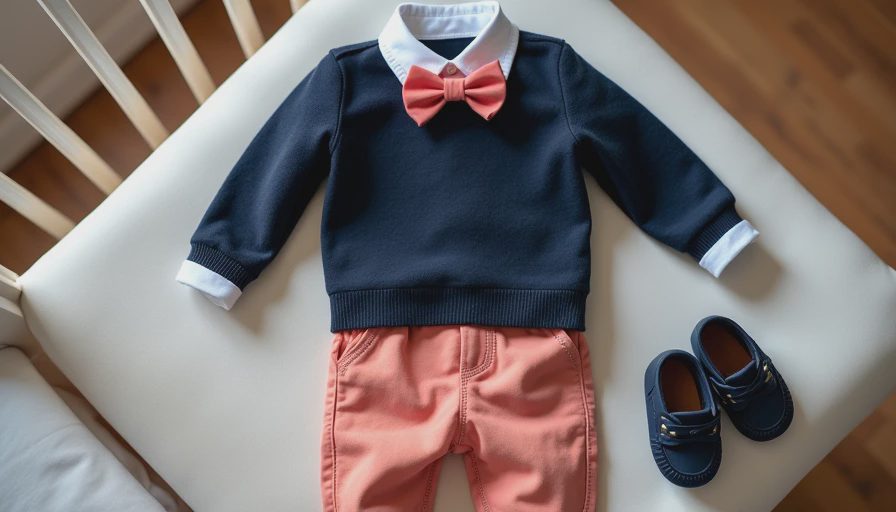
Shopping with a buyer’s eye
When you shop for a baby boy valentines outfit, inspect the inside as carefully as the front. Turn the garment inside out. Look for tidy seam finishing, secure snaps, and fabric that feels smooth rather than coated. Wash instructions tell you something about its future, too. If an everyday baby garment requires delicate handling every time, it may not receive the life it deserves.
Brands such as Primary, Hanna Andersson, Tea Collection, and Colored Organics often offer practical cotton basics in a useful range of colors, while independent children’s boutiques can be good places to find unusual knits or small-batch details. The label matters less than the garment’s construction. A $24 cotton romper that gets worn twice a week has more value than a $90 novelty piece that stays in a drawer.
Ask your child, even before they can answer, what the clothes feel like. Watch whether they pull at a collar or relax into a soft sweater. As they grow, offer two choices and listen to the choice they make. Style begins as sensory experience long before it becomes an opinion.
Let the child remain the occasion
The most memorable baby boy valentines outfit is not necessarily the most literal. It is the one that allows a baby to look comfortable, curious, and unmistakably themselves. Choose one element that honors the day, then let the rest support it. A heart can be stitched, printed, implied by color, or left entirely to the card beside the photograph.
Iris once rejected an elaborate holiday dress because the lining felt “like paper.” She chose a plain sweater instead and spent the afternoon drawing flowers at the kitchen table. The sweater was not the outfit I had imagined, but it was the right one because she could forget about it. That is the standard I return to: clothes should speak for the child, not over them.
Whether you choose a cranberry romper, a rose sweatshirt, or a cream knit with one small embroidered heart, leave room for movement and surprise. Valentine’s Day is already full of meaning. The clothing only needs to make a gentle place for it.

No comments yet — be the first to share a thought.