A newborn winter hat is one of those tiny garments that carries more responsibility than its size suggests. It should keep a small head comfortable outdoors, stay gently in place, and feel soft enough for delicate skin. It can also be beautiful without becoming fussy. The best choices have a calm palette, a considered shape, and no unnecessary decoration competing with the child.
I think of this purchase less as finding a miniature version of an adult accessory and more as choosing a useful first layer. Newborns cannot tell you that a seam is scratchy or that a brim has slipped over an eyebrow. Parents have to read the fabric, construction, and fit on their behalf. That is where a buyer's eye helps.
Start with warmth, not bulk
A newborn winter hat should provide light insulation without creating a heavy, padded feeling. Newborns lose heat quickly, but they can also become overheated when wrapped in too many layers. For a walk from the house to the car, a fine merino wool knit, cotton-lined bonnet, or soft fleece style can be practical. The right choice depends on the temperature, wind, length of time outside, and the other layers already being worn.
Merino is especially appealing because it is warm for its weight and has a smooth, slightly springy hand when well made. Cotton jersey feels familiar and breathable, though it is not the strongest choice for a long, windy outing by itself. Fleece offers cozy protection, but look for a fine, flexible version rather than a thick fabric that makes the head look swallowed. A newborn winter hat should complement a coat or blanket, not create a second bulky cocoon.
Color matters here, too. Oatmeal, soft moss, faded blue, warm cream, and rust tend to look lovely in winter light and photograph with more depth than stark white. A muted color can make a simple hat feel thoughtful, especially when paired with a blanket in a nearby shade rather than an exact match.

Read the details that touch the skin
Turn the hat inside out before buying it. This small habit reveals more than a product photograph usually can. Feel the seam where the crown meets the band. Is it flat and smooth, or does it create a raised ridge? Check whether the label is printed directly onto the fabric. If there is a sewn-in tag, it should be easy to remove without leaving a rough edge.
A good newborn winter hat usually has a gentle stretch around the opening. That stretch should recover after being pulled, rather than staying loose and collapsing over the face. The fabric should feel supple in your hand, with no stiff synthetic shine or coarse yarn. Rib knit can offer a secure fit, while a single-layer jersey cap works nicely indoors or during milder weather.
Avoid decorative buttons, beads, pom-poms that can loosen, and long ties. Anything that can detach or wrap around a small neck does not earn its place on a newborn garment. Ear flaps can be useful in genuine cold, but they should lie flat and attach securely. Practical design has its own beauty; nothing needs to dangle to make the outfit feel finished.
Find the shape that suits real life
A newborn winter hat should stay on without being tight. The lower edge should sit comfortably above the eyebrows and cover the ears when the weather calls for it. If the hat leaves a deep mark around the forehead, it is too snug. If it slips over the eyes after a few minutes of movement, the opening is too generous or the crown is too long.
Bonnet shapes are useful because they frame the face and can cover the ears without requiring a tight elastic edge. A simple watch-cap silhouette is easier to layer and often transitions well from stroller walks to short errands. For a newborn who spends most of the day indoors, a lightweight cap is often enough; outdoor warmth should come from the complete outfit rather than one exceptionally thick accessory.
Try the hat during a quiet moment, not when the baby is already hungry or tired. Place it gently, check the forehead and ears, and watch for redness when it comes off. The same newborn winter hat can fit differently after washing, so follow the care instructions and reassess the shape before the next outing.
Safety belongs inside the design
The prettiest newborn winter hat is not useful if it makes temperature regulation difficult. Remove it once the baby is indoors, especially in a heated room, and check the back of the neck for signs of overheating. A warm neck does not always mean a problem, but sweaty skin, flushed cheeks, or damp hair are cues to remove a layer and cool the environment.
For car travel, avoid bulky clothing beneath the harness because extra padding can interfere with a snug fit. A thin hat may be worn when appropriate, but it should never cover the eyes, nose, or mouth. Once the car is warm, remove the hat. During sleep, follow safe-sleep guidance and avoid loose items in the sleep space; an everyday winter accessory belongs with supervised dressing, not in the crib.
These checks do not make dressing anxious. They make it observant. The goal is a hat that works quietly while a parent pays attention to the baby rather than constantly adjusting a costume.
Build an outfit around texture and proportion
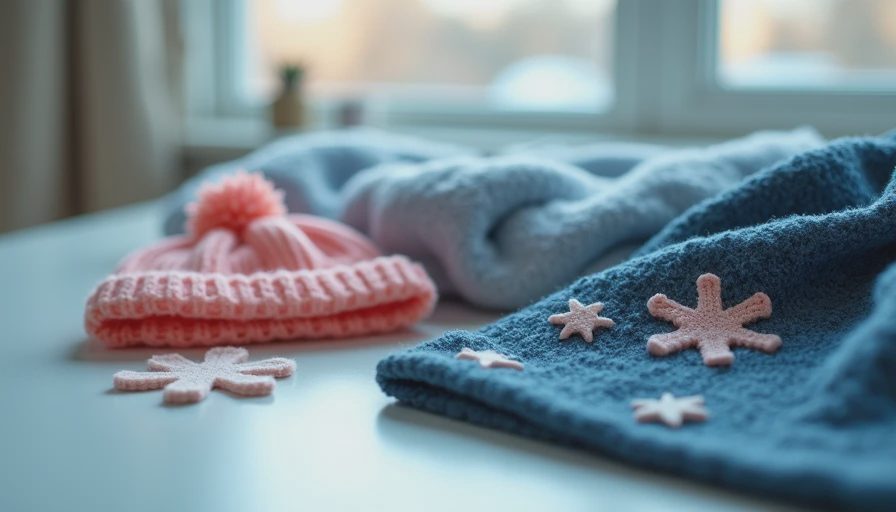
A newborn winter hat looks most considered when it relates to the rest of the outfit through texture rather than a loud theme. Pair a fine cream knit with a quilted one-piece in olive or tobacco. Put a ribbed cap beside brushed cotton in dusty blue. If the outer layer has a busy print, choose a quiet solid hat so the pattern has room to breathe.
Proportion is just as important. A very large pom-pom can overwhelm a newborn's face, while a close-fitting cap lets the cheeks, eyes, and expression remain the focus. A bonnet with a narrow tie-free edge has a storybook quality without turning the baby into a character. Clothes should speak for the child, not over them.
When I was buying children's outerwear, I paid attention to the way an accessory completed a silhouette from across the room. A good newborn winter hat should do that gently. It can echo a color in a blanket or pick up the warmth of a wool coat, but it does not need to announce itself.
A simple buying and care plan
Begin with the weather you actually experience. A family in Minnesota will need a different rotation from one in coastal Georgia, where winter mornings can be cool but brief. Choose one lightweight option for indoor transitions and milder days, then add a warmer style for longer outdoor time. Two well-fitting hats are usually more useful than a drawer full of novelty pieces.
Wash the hat before the first wear using the care instructions. A delicate detergent without a strong fragrance is a sensible choice for newborn skin. Reshape knit styles while damp and let them dry flat when the label calls for it. Do not stretch a wet hat over a jar or form; that can distort the opening and make the fit unreliable.
A newborn winter hat should be easy to find, quick to wash, and pleasant to reach for. Look at the crown, seams, opening, fibers, and finish before looking at the label. If the piece feels soft, secure, breathable, and proportionate, it has already done most of its work.
The final choice can still have a little poetry. Perhaps it is a moss-colored rib knit that makes a cream blanket look warmer, or a small bonnet in faded blue that catches the morning light. Practical clothing does not have to be anonymous. Choose the newborn winter hat that protects comfortably, wears simply, and leaves the baby's own presence as the most memorable part of the picture.




No comments yet — be the first to share a thought.