A baby christmas outfit has a particular job: it should make the photograph lovely without turning the baby into a holiday prop. The best pieces leave room for wiggling, feeding, naps, and the wonderfully unplanned gestures that make a family gathering memorable. I look for softness first, then proportion, color, and the small construction details that separate a charming garment from one that will be abandoned before dessert.
Christmas clothing also gives a child an early language of texture and color. A brushed cotton collar, a deep cranberry knit, or a tiny wooden button can become part of the season’s memory. That does not require sequins, slogans, or a miniature version of an adult tuxedo. Clothes should speak for the child, not over them.
Start with the fabric, not the photograph
When I handled children’s clothing as a Nordstrom buyer, I learned to turn a garment inside out before admiring the front. For a baby christmas outfit, inspect the seams, elastic, snaps, and labels. The inside should feel calm against the skin. Look for cotton jersey, cotton flannel, merino wool with a soft finish, brushed corduroy, or a cotton-and-linen blend for warmer climates. A scratchy metallic thread can look festive on a hanger and become unbearable around a baby’s neck.
Fabric weight matters as much as fiber. A bulky sweater under a car-seat harness is awkward and can interfere with a secure fit. Thin layers are more useful: a cotton bodysuit, a soft knit cardigan, and trousers or a simple romper. In a heated home, that combination can be adjusted without a full change. For a southern Christmas, breathable cotton and open-weave knits are often more comfortable than heavy velvet. In colder regions, add warmth over the harness with a blanket rather than a thick coat beneath it.
Check the care label, too. A beautiful outfit that requires delicate cleaning after one spit-up is not a practical heirloom. Machine-washable pieces from brands such as Hanna Andersson, Primary, or Burt’s Bees Baby can earn their place through repeat wear, while a special bonnet or hand-knit cardigan can provide the keepsake note.
Let color carry the holiday feeling
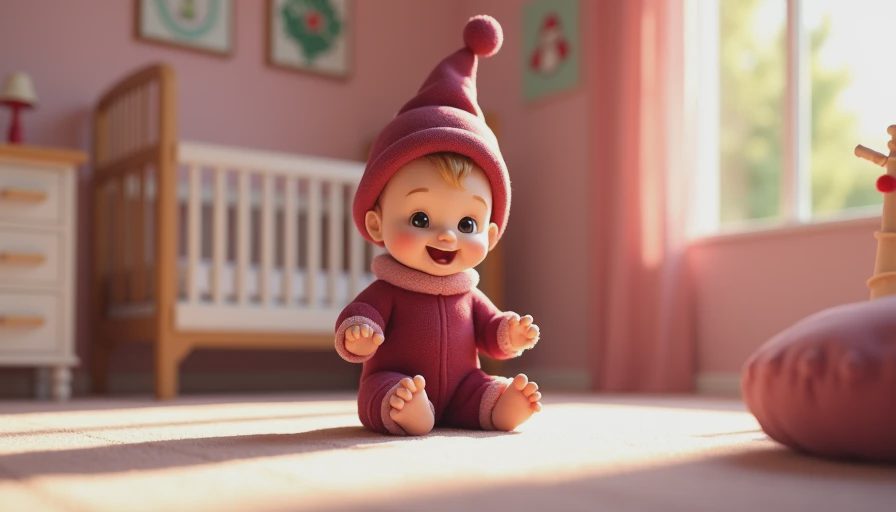
Red and green are not the only ways to make a baby christmas outfit feel seasonal. Oatmeal, faded pine, cranberry, tobacco, cream, and muted gold have more depth in natural light. A soft blue can feel wintry without becoming themed, while chocolate brown gives red a quieter, storybook quality. Place the garment near a window before deciding; some colors become flat under indoor bulbs and luminous in daylight.
I prefer one clear color idea rather than several competing decorations. A cream knit romper with a cranberry sock, or a pine-green cardigan over a striped bodysuit, feels considered. If the outfit already has a fair isle pattern, keep the rest simple. Pattern scale matters on a small body: a delicate stripe or scattered motif usually reads more clearly than a large graphic.
Ask the child, when possible, what they notice. Even a young toddler can choose between a rust-colored cardigan and a blue one. The answer may be based on a favorite crayon, a picture-book character, or simply the way one fabric moves. That preference is the beginning of personal style, and it deserves more attention than a perfectly coordinated family portrait.
Build the outfit around movement
A baby christmas outfit should accommodate the body beneath it. For a crawler, wide-leg bloomers, leggings, or soft pull-on pants allow movement without catching at the knees. For a baby who is mostly held, a romper with snaps along the inseam makes diaper changes much easier than a complicated layered dress or stiff pair of trousers. A loose collar can fold into the face, and long ribbons should be avoided around the neck.
Think about the day’s sequence. If the family is traveling, choose a base layer that can stand alone after a spill. If there is a church service, dinner, or a visit with grandparents, pack one spare top and socks in the diaper bag. Socks disappear with impressive speed, so shoes are often unnecessary for a nonwalking baby. A soft pair of booties is enough for warmth and photographs.
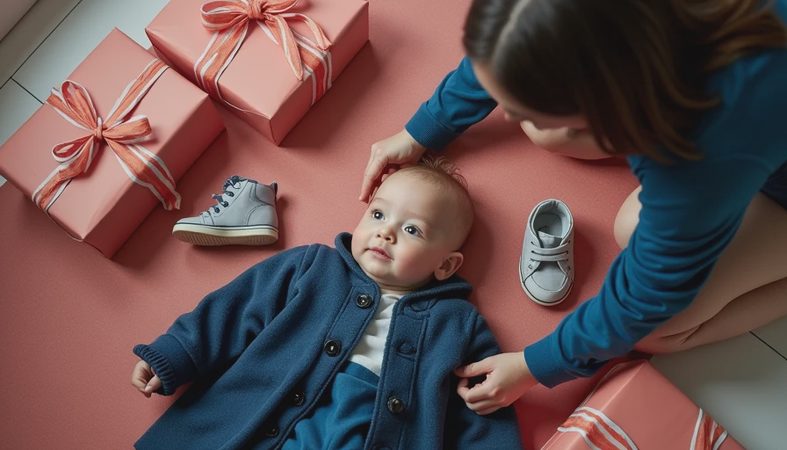
For older babies, test the outfit on the floor rather than only in front of a mirror. Can the child sit, reach, crawl, and pull up? Does a waistband leave a mark after ten minutes? Is a button likely to end up in a mouth? These are not unglamorous questions; they are the design brief.

Choose pieces that will live beyond December
The most satisfying baby christmas outfit is rarely a single-use costume. Look for a cardigan that will work with denim in January, corduroy pants that can meet a striped tee, or a dress that becomes a birthday layer with a different pair of tights. A velvet hair bow or festive sock can provide the holiday note without requiring the whole outfit to announce Christmas.
Brands such as Petit Bateau are known for straightforward cotton basics, while Tea Collection often offers playful color and travel-friendly separates. Mini Boden can be useful when you want brighter pattern and sturdy everyday construction. These names are starting points, not rules. An independent shop, a hand-me-down, or a carefully chosen secondhand piece may have better fabric and more character than a new item with a louder label.
Before buying, compare the garment with what is already in the closet. If the child owns three cream sweaters, a rust cardigan may open more combinations. If nearly everything is soft gray, a small dose of tomato red could make winter dressing feel fresh. The buyer’s eye is partly about beauty and partly about avoiding an orphaned purchase.
Photograph the feeling, not just the clothes
The room, light, and child’s mood will do more for a holiday photograph than an elaborate baby christmas outfit. Natural window light shows texture and skin gently. A blanket in oatmeal or a chair upholstered in faded blue can create a quiet background. Let the baby hold a board book, a wooden ornament, or a sprig of greenery only with close adult supervision; the object should suggest the season without becoming a prop that steals attention.
Take some photographs before the gathering becomes busy. Then allow the outfit to wrinkle, the socks to come off, and the baby to turn away. Those imperfect frames often hold the real story: a curious hand reaching toward a ribbon, a sleepy cheek against a grandparent’s shoulder, or a new walker leaning into a table for balance.
Comfort shows in pictures. A relaxed baby has a more expressive face, and a parent who is not constantly adjusting a collar can be present in the room. That is the quiet success of thoughtful dressing.
A simple final edit before you buy
Lay the complete baby christmas outfit on a bed and make three checks. First, touch every surface that will meet the skin, including the neckline and waistband. Second, consider the weather, car-seat safety, and the number of diaper changes the day will require. Third, imagine each piece with two ordinary outfits after the holiday. If the answer is yes, the purchase has a life beyond the photograph.
Choose one detail that feels like the child: a surprising color, a beloved soft texture, or a pattern with a little mischief in it. Christmas dressing does not need to be loud to be memorable. A small person in a well-made cardigan, reaching for the lights with complete concentration, already carries the season beautifully.


No comments yet — be the first to share a thought.