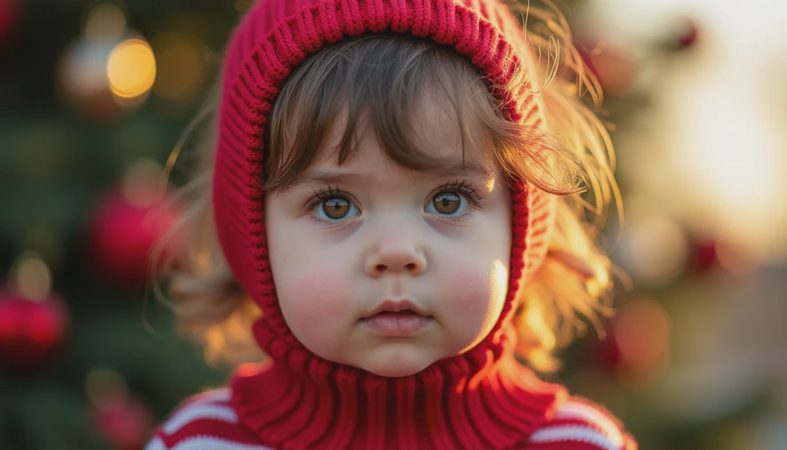
Choosing baby girl christmas outfits is less about creating a tiny holiday costume and more about noticing what helps a child feel comfortable, curious, and entirely herself. A velvet collar can be lovely, but only if the child wearing it can turn her head. A deep cranberry knit may photograph beautifully, yet a soft oat-colored dress might better suit the quietness of a family morning.
I approach festive dressing with a buyer's eye and a parent’s patience. Look first at the fabric, then the cut, and only afterward at the decoration. Holiday clothes should have a little ceremony, certainly, but they also need to survive crawling, cracker crumbs, warm living rooms, and the sudden desire to run outside. Clothes should speak for the child, not over them.
Start with the feeling, not the theme
The most successful baby girl christmas outfits usually begin with a mood rather than a printed slogan. Imagine candlelight on a wooden table, paper stars in a window, or the green shadow of a wreath against a white wall. Those images can guide color without turning the outfit into a costume.
Warm ivory, pine, faded rose, cranberry, tobacco, and soft blue all feel seasonal without insisting on one particular version of Christmas. A simple cotton dress in brick red can look spirited with brown Mary Janes. A cream cardigan over corduroy bloomers has the gentle texture of a storybook illustration. For a baby who dislikes dresses, brushed cotton trousers with a ruffled blouse or a knit romper can carry the same sense of occasion.
Notice how color behaves in your home. A bright red may feel cheerful in daylight but harsh beneath warm bulbs. Dusty berry, by contrast, often deepens beautifully in evening photographs. The goal is not a picture-perfect palette. It is a combination that lets your child’s face, gestures, and particular way of moving remain the most interesting things in the room.

Choose fabrics that invite movement
When I assess baby girl christmas outfits, I rub the fabric between my fingers before I look at the trim. Cotton corduroy has a soft ribbed hand and enough structure for photographs. Brushed flannel feels warm without the stiffness of formal suiting. Merino wool can make a beautiful cardigan, but test the inside against a sensitive neck and look for a smooth finish at the seams.
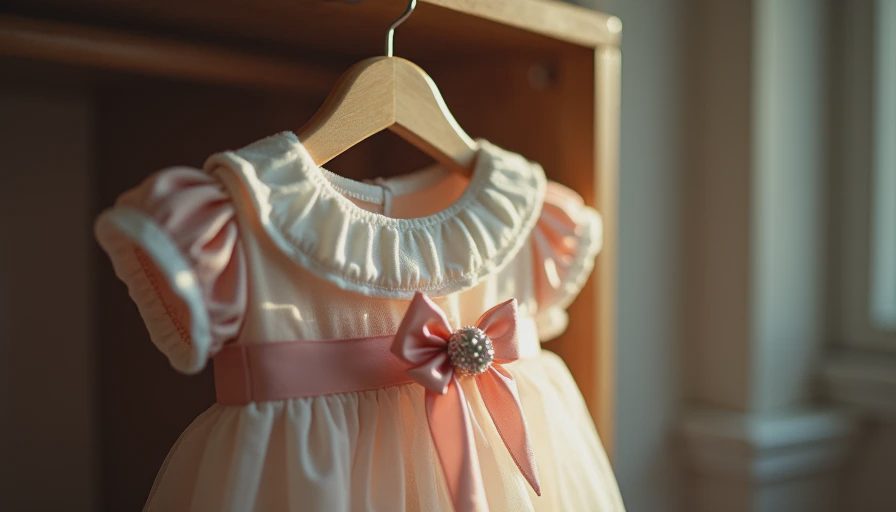
Velvet is festive because it catches light as the wearer moves. It is especially lovely on a yoke, hair bow, or little jacket rather than as an entire outfit that might feel heavy. Tulle can add volume, but a single layer over a cotton lining is more wearable than several scratchy layers. For babies, prioritize flat seams, covered elastic, and openings that make diaper changes straightforward. A beautiful garment that requires a wrestling match is not a successful garment.
Consider the room and the child together. A December gathering in a drafty house calls for tights, a wool cardigan, and perhaps a quilted vest. A warm Southern celebration may need only a cotton dress and a light sweater. Overdressing can make an otherwise lovely outfit feel like a burden, especially for a child who is still learning how to name discomfort.
Build one memorable piece around familiar basics
The best baby girl christmas outfits often include one special element and several pieces the child already understands. That might be a hand-smocked dress with plain tights, a tartan skirt with a cream bodysuit, or a velvet jacket over soft leggings. Familiar basics reduce the sensory surprise of dressing up while allowing one detail to carry the holiday mood.
Try the outfit at home several days before the event. Watch what happens when the child sits, reaches, bends, and walks. Does the waistband roll? Does the collar press beneath the chin? Do the tights stay in place? These small observations matter more than the garment’s appearance on a hanger.
A useful wardrobe formula is texture plus ease plus one note of color. Pair a nubby knit with smooth cotton and a cranberry ribbon. Combine corduroy with jersey and a green sock. Layer a patterned blouse beneath a plain pinafore so the print appears at the sleeves and neckline without taking over the entire composition. Children often look most polished when the outfit gives the eye somewhere to rest.
Let the child participate in the styling
Holiday dressing becomes more meaningful when a child has a small role in it. Offer two choices rather than presenting a finished answer: the green cardigan or the red one, velvet shoes or brown boots, a ribbon or no ribbon. Even a baby can show a preference through reaching, turning away, or settling happily into one texture.
With older toddlers and children, use descriptive language instead of praise that depends on appearance. Say, “That cardigan has a soft, nubby texture,” or “The berry color looks darker in this light.” This gives the child vocabulary for their own responses. Maybe they love a sparkly clip but dislike stiff shoes. Maybe they choose striped socks with a formal dress because the stripes make them laugh. Those choices are not mistakes to correct; they are the beginnings of a point of view.
Iris once assembled a holiday outfit around a pair of glittery socks that did not match anything else. She wore them with a navy pinafore, a faded red sweater, and scuffed shoes. The socks flashed whenever she ran through the hallway, which was precisely why she had chosen them. The outfit looked like her, not a display window, and that distinction is worth protecting.
Shop with the next season in mind
A thoughtful holiday purchase should have a life beyond one photograph. Look for a dress that can become a birthday outfit with a different cardigan, trousers that work with everyday knits, or a jacket that layers beneath a winter coat. Cotton, corduroy, wool blends, and sturdy knits tend to offer more usefulness than novelty fabrics covered in glitter or stiff appliques.
Inspect the construction before buying. Even stitching, reinforced buttons, a lined bodice, and a hem with enough allowance to let it down are quiet signs of care. Brands such as Hanna Andersson, Tea Collection, Oeuf, and smaller independent children’s labels often approach comfort and longevity differently, so read the fiber content and measurements rather than relying on a name alone. A higher price can reflect better construction, but it does not automatically guarantee it.
If you are buying secondhand, check underarm seams, elastic recovery, stains near the collar, and whether the fabric has become brittle from repeated washing. A beautifully made vintage piece can be wonderful, but it should be comfortable and safe for the child who inherits it.
A simple holiday dressing plan
For a family gathering, choose the main garment first, then add warmth, practical shoes, and one small personal detail. For a photograph, stand near a window and let natural light reveal the fabric instead of adding more decoration. For a busy party, pack a backup top, soft leggings, and socks in an easy-to-reach bag. A spare layer can preserve everyone’s mood after juice, frosting, or an enthusiastic crawl across the floor.
The strongest baby girl christmas outfits are not necessarily the fanciest. They are the ones that allow a child to sit at the table, chase a ribbon, study a picture book, and return for another cookie without feeling dressed as someone else. Choose color that feels alive, materials that welcome touch, and details that leave room for movement. The holiday magic is already there. The clothes only need to make space for it.

No comments yet — be the first to share a thought.