When parents search shop girls dress, they are often looking for more than a pretty silhouette. They want something comfortable enough for a school day, distinctive enough for a family gathering, and open-ended enough for a child to make it her own. I understand the search. After eight years buying children’s clothing at Nordstrom, I learned that a lovely dress is not defined by ruffles, labels, or a picture-perfect finish. It is defined by how it moves through a real child’s day.
A dress should bend when a child bends, breathe when the afternoon turns warm, and survive the particular intensity of a snack, a sidewalk, and an imaginative game. Clothes should speak for the child, not over them.
Start With the Fabric, Not the Decoration
The hand of a fabric tells you almost everything. Hold cotton poplin up to the light and you will see a crisp, airy structure that works beautifully for school portraits, picnics, and warm-weather celebrations. Double gauze feels softer and more cloudlike, with a gentle rumple that looks better after movement than after ironing. Linen has a beautiful grain and cool touch, though a little wrinkling is part of its character rather than a flaw.
For an everyday shop girls dress choice, I look for cotton, linen blends, soft corduroy, or lightweight jersey with enough substance to hang cleanly. Extremely thin fabric can twist around the body and lose its shape by lunchtime. Very stiff synthetic fabric may hold a bow beautifully in a photograph but feel warm and noisy during play. In Savannah’s humidity, that distinction matters. A breathable dress lets a child forget she is wearing it.
Look inside as well as outside. Smooth seam finishes, covered elastic, and a thoughtfully placed label prevent small irritations from becoming the entire conversation. Iris has rejected otherwise beautiful clothing because one seam felt scratchy at the shoulder. She was right to notice.
Shape Should Make Room for Motion
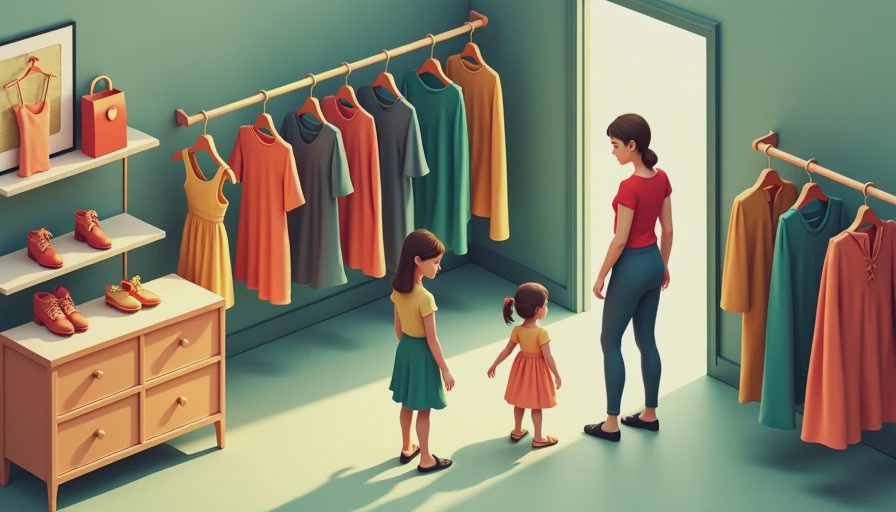
The most successful shop girls dress silhouettes are generous without looking shapeless. A softly gathered waist gives room through the torso, while a gentle A-line allows a child to run, sit cross-legged, and climb into the back seat without tugging at the hem. A straight shift can be wonderfully versatile when the armholes are cut with care and the fabric is not too stiff.
Check proportion before buying. The shoulder seam should sit near the shoulder rather than sliding down the arm. Armholes should allow movement without exposing half the bodice. A skirt should have enough sweep for a child to move comfortably, but not so much volume that she has to carry it up stairs. If the dress has buttons, make sure they are securely attached and easy enough for a child to manage as independence grows.
Length is personal and practical. A midi hem can feel poetic with boots, while a shorter hem may make more sense for playground days. The point is not to enforce one ideal. It is to notice whether the child can move naturally in the proportions she likes.
Color Is a Conversation
Color changes in natural light, and children notice that before they have the vocabulary to explain it. A muted coral may look almost peach beside a window, while a deep green can become blue-toned beneath fluorescent classroom lights. Rather than presenting a child with a finished answer, offer a few observations: “This blue feels quiet,” or “The yellow looks bright near your face.” Then listen.
A shop girls dress in a familiar color can become a dependable favorite, but an unexpected shade often reveals a child’s emerging point of view. Iris once chose a brownish plum dress that I would have overlooked on a rack. In the garden, it looked like the underside of a fig leaf. She paired it with glitter socks and red sneakers. The combination was entirely hers, and far more interesting than a coordinated outfit I might have assembled.
Print deserves the same attention. Small florals feel different from large graphic shapes; gingham reads differently from watercolor stripes. Look at the scale of the pattern against the child’s frame. A bold print should not disappear into a sea of decoration, and a tiny print should not make the garment feel anonymous.
Dress for the Actual Calendar
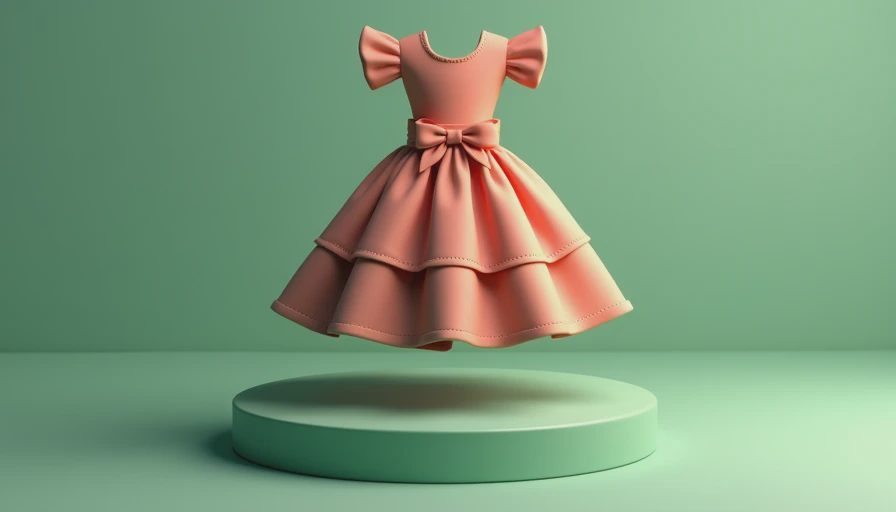
A beautiful wardrobe becomes useful when it answers real mornings. For school, choose washable fabrics, secure closures, and layers that can handle a change in temperature. A cotton dress under a cardigan works through a cool classroom and a warm walk home. For a birthday gathering, velvet, embroidered cotton, or a softly pleated skirt can bring occasion without making the child feel costumed.
When you shop girls dress options, picture three settings before committing: the place where the garment will be worn, the activity likely to happen there, and the care it will require afterward. A special-occasion dress that needs dry cleaning may be less valuable than a beautifully finished cotton style that can be washed and worn again. Cost per wear is a useful measure, especially for children who grow quickly.
Consider the rest of the closet, too. A dress that works with sneakers, Mary Janes, sandals, or a faded denim jacket will earn more invitations than one that demands a complete supporting cast. The best pieces create several outfits without losing their own character.
How to Invite a Child Into the Choice
Shopping can become a lesson in observation rather than a test of taste. Start by narrowing the field to two or three choices that meet your practical requirements. Then ask questions with no hidden correct answer: Which fabric feels nicest? Which color do you want to see while you move? Would you wear it with boots or sneakers? These questions give a child useful language without asking her to perform gratitude.
If you shop girls dress styles online, let the child study more than the front photograph. Zoom in on the fabric, inspect the back closure, and read the fiber content together. Measure a favorite garment at home rather than relying only on age labels, since sizing varies widely between makers. A well-designed size chart is more informative than a model’s age.
It is also fine to leave the page empty. A child may like a dress in theory and reject it the moment it touches her skin. That is not difficult behavior; it is information. Comfort, movement, and self-recognition are part of the purchase.
A Buyer’s Final Check
Before placing an order, I ask whether the garment has a clear point of view. Is it the color, the shape, the fabric, or a small detail such as a wooden button or hand-drawn-looking print? One strong idea usually feels more lasting than five decorative ones. I check the seams, lining, closure, wash instructions, and return policy. I imagine the child wearing it while eating, sitting, laughing, and changing her mind about where the afternoon will lead.
The right shop girls dress choice should not make a child look like a miniature adult or a catalog character. It should give her a little room to become more visible. Search widely, touch fabrics when you can, and trust the child’s response. Sometimes the most successful purchase is the quiet blue dress she reaches for every Tuesday, then brightens with a crooked hair ribbon. That is style beginning where it should: with recognition.


No comments yet — be the first to share a thought.