Christmas kidswear has a particular challenge: it should feel special, but it should still belong to the child wearing it. The best holiday clothes do not turn a small person into a decoration. They offer a little velvet, a beautiful color, or a satisfying swish, then leave room for the child’s own presence. When I think about Christmas kidswear, I begin with comfort, movement, and the question every garment should answer: can this child still be themselves in it?
Iris once chose a deep green cardigan for Christmas morning because it reminded her of the moss near our garden wall. It was not the most obvious holiday choice, and that was precisely why it worked. Paired with a cream cotton blouse and corduroy trousers, it looked festive in the quiet way a wreath looks festive: textured, seasonal, and not shouting for attention.
Start with the feeling, not the theme
A useful way to shop Christmas kidswear is to describe the feeling you want before looking at motifs. Perhaps you want something warm and storybook-like, with brushed cotton, russet red, and soft cream. Perhaps your child prefers sparkle, in which case a sequined hair clip or metallic socks can provide enough light without covering an entire outfit in glitter. Perhaps they love movement and need a full skirt, wide-leg pants, or a jacket with sleeves that allow them to climb the stairs two at a time.
This approach keeps a holiday wardrobe from becoming a costume. A burgundy knit, a tartan overshirt, or a pale blue velvet ribbon can suggest Christmas without using a row of reindeer across the chest. Color does much of the seasonal work. Look at how it changes in natural light: pine green can appear nearly black indoors, while cranberry red often becomes softer beside ivory. Those shifts give an outfit depth.
Ask your child to choose between two or three thoughtful options. “Do you like the green that feels like leaves or the red that feels like berries?” is more useful than “What do you want to wear?” when the closet is full. It gives them vocabulary without taking away authorship.
Choose fabrics that can survive the day
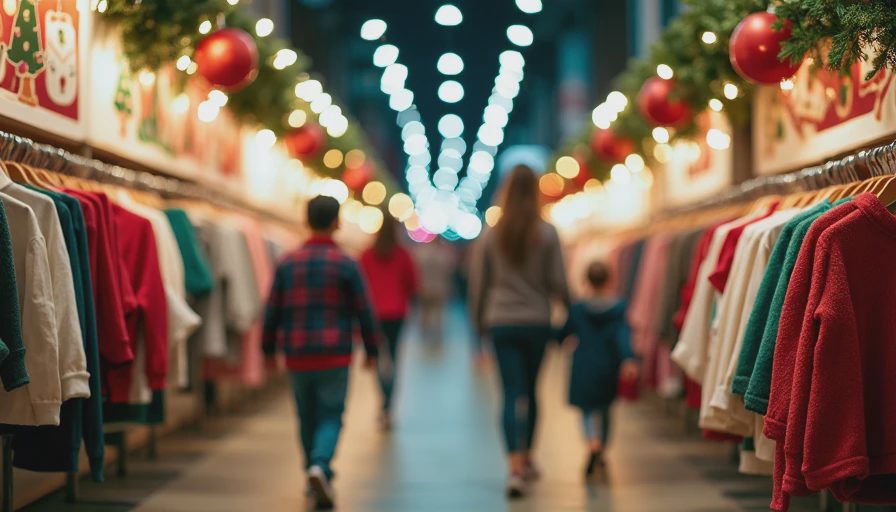
Beautiful Christmas kidswear must tolerate real childhood. A child may sit on the floor to open gifts, run outside in the cold, lean against a dog, or spill cocoa before the first photograph. Fabric hand matters as much as appearance. Cotton flannel feels generous against the skin, brushed wool adds warmth without looking bulky, and cotton corduroy has enough structure for a polished outfit while remaining forgiving at the knees.
For a dress or skirt, examine the lining and seam placement. A scratchy synthetic lining can ruin an otherwise lovely garment within minutes. Check whether the waistband lies flat and whether the armholes allow a full reach. Elastic at the back can make dressing easier, but it should not pinch. If a sweater is made from wool, let your child touch it before buying; some children love the dry, airy feel, while others notice every fiber.
Washability deserves equal attention. A machine-washable velvet-look dress is often more practical than a delicate heirloom piece if your family expects several gatherings. Brands such as Hanna Andersson are known for comfortable, durable playwear, while Boden often brings lively color and pattern into more occasion-ready pieces. The label matters less than the garment’s construction and your child’s sensory preferences.
Build one memorable piece around familiar clothes
The most convincing Christmas kidswear outfits usually contain one piece with presence, not five competing holiday signals. A velvet pinafore can sit over a T-shirt your child already loves. A fair isle sweater can make ordinary denim feel considered. A satin bow, checked trousers, or a polished Mary Jane-style shoe can carry the occasion while the rest of the outfit stays easy.
This is also kinder to a growing wardrobe. Instead of buying a complete look that will only appear once, choose a garment that can return in January. A cranberry cardigan works with gray sweatpants after the holidays. A cream blouse can accompany jeans. A metallic skirt can be worn with a plain sweatshirt when the tree has come down. Cost per wear is not a glamorous phrase, but it is one of the clearest ways to recognize good design.
For family photographs, consider contrast rather than matching. If one person wears deep red, another might wear oatmeal, forest, faded denim, or warm brown. Similar texture can create harmony without making everyone look arranged. Christmas kidswear should add to the picture, not flatten the people inside it.

Let children participate in the styling
A child’s strongest outfit often includes one decision an adult would not have made. Iris once paired a velvet skirt with striped socks and a cardigan covered in tiny embroidered flowers. On paper, the pieces were busy. In motion, they made sense because the socks gave her the confidence to run, and the flowers made her smile whenever she looked down.
Try setting out a small selection the night before: two tops, two bottoms, and one accessory. Talk about texture, color, and comfort. “This collar frames your face” teaches observation. “That fabric will feel warm in the car” teaches practical judgment. Neither statement tells a child that one choice is correct. Clothes should speak for the child, not over them.
Accessories are especially good territory for experimentation. A soft beret, colorful tights, suspenders, a ribbon, or a small crossbody bag can change the character of a familiar outfit. Avoid anything that requires constant adjustment during dinner. The point is not a perfect photograph; it is a child who can forget what they are wearing long enough to enjoy the day.
A simple holiday wardrobe plan
For a child attending several events, I would begin with three foundations. First, choose one comfortable everyday festive piece, such as a patterned flannel shirt or a textured knit. Second, add one occasion garment with a distinct surface: velvet, corduroy, brushed wool, or satin used thoughtfully. Third, choose a layer that works across both, such as a cardigan, chore jacket, or quilted vest.
Then test the combinations before the event. Can the shirt fit beneath the sweater without bunching at the neck? Can the child sit comfortably in the trousers? Do the shoes stay secure when walking quickly? Does the dress need a slip, tights, or an undershirt? These small checks prevent the familiar holiday scene in which an adult is fixing a waistband while everyone else is waiting by the door.
A practical Christmas kidswear capsule might include a forest-green knit, cream cotton top, dark denim, corduroy pants, one patterned skirt or dress, and a weather-appropriate coat. Add one playful accessory chosen by the child. That is enough for several combinations and leaves space for personality.
Look for the story in the garment
When I was buying children’s clothing, I learned to look beyond the front view. Turn the garment around. Notice whether the seams are neat, whether the buttons feel secure, and whether the pattern matches across a pocket. See how the fabric falls when the child moves rather than only how it looks on a hanger. A good piece has a quiet logic: the color, proportion, and texture support one another.
That is the buyer’s eye I bring to Christmas kidswear. Not a demand for expensive labels, and not a rule that every outfit must look editorial. A well-made garment can come from a familiar brand, a local shop, or a carefully chosen hand-me-down. Its value is in how it serves the child.
Before you buy, invite your child into the final question: “What part of this feels like you?” The answer might be the green, the pockets, the sparkle, or simply the fact that it does not itch. That answer is more important than a perfect holiday palette. The loveliest Christmas kidswear gives a child enough structure for the occasion and enough freedom to remain wonderfully, unmistakably themselves.



No comments yet — be the first to share a thought.