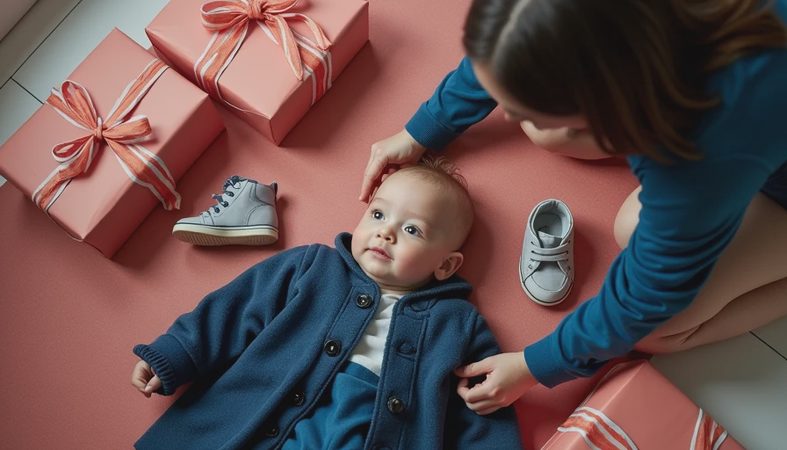
There is something tender about choosing my first christmas outfit. The phrase suggests a milestone, but the clothing should never make the child feel like a display piece. A first holiday gathering can be noisy, warm, and full of unfamiliar arms. The right outfit leaves room for all of that: a little movement, a snack, a nap, and the particular personality already emerging beneath the wrapping paper and twinkle lights.
I think of holiday dressing as composition rather than costume. Start with one beautiful element, then build around it with softness and ease. A brushed cotton shirt, a velvet headband, a pair of corduroy overalls, or a cardigan in the color of cranberry skin can carry the feeling of Christmas without turning a child into a miniature adult. Clothes should speak for the child, not over them.
Begin with the child, not the occasion
Before shopping, notice what your child already reaches for. Do they love sleeves that move when they run? Do they avoid anything stiff at the neck? Are they drawn to tomato red, moss green, butter yellow, or the quiet blue of winter light? These observations are more useful than a generic holiday checklist.
For my first christmas outfit, comfort begins with the base layer. Look for cotton, merino, brushed flannel, soft corduroy, or a cotton-modal blend with a smooth hand. Examine the inside of the garment, especially at the collar, waistband, and armholes. A decorative seam can look charming from across the room and feel unbearable after ten minutes.
For infants and toddlers, prioritize easy access for diaper changes and bathroom trips. Snaps are helpful, but they should lie flat and open without a struggle. Elastic waistbands should stretch comfortably without leaving a deep impression. If a child is old enough to dress independently, choose closures they can manage. A holiday outfit becomes more successful when the child can participate in putting it on.

Color creates the holiday feeling
Christmas color does not have to mean bright red and forest green. A palette of cream, faded rose, and warm brown can feel like candlelight. Navy with silver-gray has the stillness of evening. Saffron, pine, and soft blue create a more storybook effect, especially in photographs taken outdoors.
When considering my first christmas outfit, look at colors in natural light before committing. Store lighting can make cream appear stark and green appear more saturated than it really is. Hold possible pieces together near a window. You are looking for conversation between the colors, not perfect matching.
A simple way to build the palette is to select one anchor piece. This might be a checked dress, a deep green sweater, or trousers in washed burgundy. Add neutral supporting pieces around it. Cream socks, brown shoes, or a heather-gray cardigan will let the special color breathe. If your child chooses the anchor piece themselves, the outfit gains something no trend can provide: recognition.
Patterns deserve the same attention. A small plaid photographs beautifully because it has rhythm without overwhelming a small frame. A large botanical print can be wonderful on a confident child who likes visual drama. There is no correct level of festivity. The question is whether the pattern feels like your child’s point of view.
Build layers that move and breathe
Holiday events often involve several climates in one afternoon: a cold car ride, a warm living room, a crowded restaurant, and perhaps a walk outside. A layered outfit handles those transitions better than one elaborate garment. Begin with a comfortable base, add the main layer, and finish with one removable piece.
For example, a ribbed cotton tee under corduroy overalls creates texture while remaining practical. A knit cardigan can come off during dinner without disturbing the whole outfit. For a dress, consider a cotton undershirt and soft leggings or tights, depending on the child’s preference and the weather. A waistcoat or quilted vest can supply ceremony without restricting the shoulders.
This is also where fabric weight matters. Velvet is beautiful, but a fully lined velvet garment can become hot indoors. Linen has a lovely irregular texture but may crease quickly. Wool warms well, though some children notice even a small amount of itch. Merino often feels smoother than traditional wool, while cotton flannel offers softness with less insulation.
The best my first christmas outfit can be worn for more than one photograph. If the main pieces work with everyday jeans, leggings, or sneakers afterward, they earn their place in the closet.

Shoes and accessories should stay quiet
Accessories are punctuation. One or two thoughtful details are usually enough: a ribbon, a knitted hat, a small leather belt, or socks with a tiny contrast stripe. Choose accessories that will not become a constant adjustment. A beautiful clip that slips every few minutes is not beautiful to the child wearing it.
Shoes deserve particular care. Holiday shoes should be broken in before the event, with room for toes to spread and enough grip for polished floors. Soft leather Mary Janes, clean canvas sneakers, suede boots, or simple loafers can all work, depending on what the child already walks comfortably in. Never introduce a difficult shoe for the first time on a long family day.
For my first christmas outfit, I would rather see a child in familiar sneakers with a wonderful cardigan than a child wobbling in formal shoes. The eye notices proportion, color, and ease before it notices a label. A garment succeeds when the child forgets they are wearing it.
Make the outfit part of the memory
Invite the child into the process without turning it into a performance. Offer two or three combinations and ask what feels most like them. Try the outfit on a week ahead, then let the child move, sit, reach, and play in it. Check for scratchy labels, slipping shoulders, tight waistbands, and sleeves that catch at the wrist.
Take a photograph in the same place the outfit will be worn if possible. This reveals details that a mirror can hide: whether the hem drags, whether the collar curls, and whether the layers sit naturally. Wash or air the pieces according to their care instructions before the event so they feel familiar rather than overly crisp.
My first christmas outfit should also include a plan for the inevitable. Keep a spare shirt, tights, or pair of socks nearby. A small stain is not a ruined memory, but having a replacement can spare everyone unnecessary tension. Pack a soft layer for changing temperatures and a familiar comfort item for younger children.
A gentle final edit
Lay every piece on the bed and remove one item. This old styling habit creates breathing room. If the outfit includes a patterned garment, keep nearby pieces quiet. If the texture is rich, let the color remain simple. If the child has chosen something wonderfully unexpected, make space for it rather than correcting it into a safer version.
When I picture my first christmas outfit, I do not imagine perfect styling. I imagine a child turning toward the tree, velvet catching a little light, one sock sliding down, and a face full of concentration while opening a package. That is the measure of the clothes: whether they support the moment without competing with it.
Choose softness first, then color, then one detail that feels personal. Leave room for crumbs, motion, and a child’s changing mind. The most lasting holiday photographs are not records of flawless dressing. They are records of a person becoming themselves, one outfit at a time.


No comments yet — be the first to share a thought.