Matching mom and daughter outfits can be a lovely visual conversation, provided the conversation has more than one voice. I think of the best pairings the way I think of a picture book spread: the colors relate, the mood carries across the page, and each figure still looks like herself. A child does not need to become a miniature adult to share a palette with a parent. Clothes should speak for the child, not over them.
Start with a shared color story
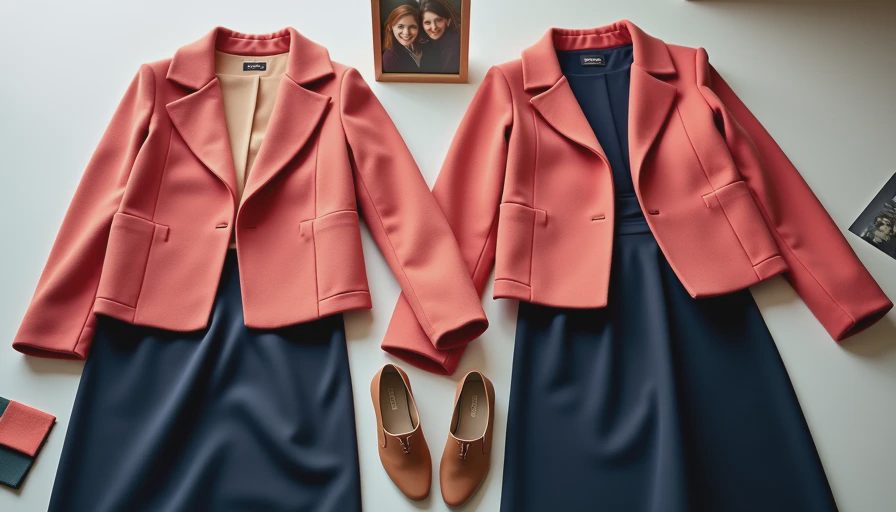
The easiest way to create matching mom and daughter outfits is to choose one color family before choosing a garment. Think faded denim, warm ivory, tomato red, or the soft green of a garden after rain. The colors do not need to match exactly. In fact, a small shift often makes the pairing feel more considered. A mother might wear a deep olive linen shirt while her daughter wears a lighter sage dress. In morning light, the connection is clear without looking staged.
I use the same approach when arranging flowers at home. One stem may be coral, another blush, and a third nearly cream, yet the vase feels unified because the tones share an undertone. Clothing works similarly. If your child loves yellow, let her wear marigold while you choose butter yellow or a small golden accessory. If your child prefers blue, try a navy cardigan beside a sky-blue cotton skirt. The point is recognition, not replication.
Fabric also carries mood. Crisp poplin gives a clean, graphic feeling; washed cotton feels relaxed; corduroy brings a little autumn weight. Pairing matching materials can be beautiful for a portrait, but contrasting textures often look more natural for daily life. A parent's ribbed sweater beside a child's brushed cotton jumper creates a quiet relationship that is visible in photographs and comfortable at the playground.

Match the feeling, not every item
The strongest matching mom and daughter outfits usually share an atmosphere rather than a complete uniform. A floral dress for one person and a solid blouse in one of the flower's colors for the other can feel more personal than two identical prints. The same is true for stripes. One person might wear a narrow Breton stripe, while the other wears a broad stripe with similar spacing and color.
Proportion matters, especially because children's clothes should preserve movement. A full adult-length skirt copied onto a child can look cumbersome, while a shorter gathered skirt lets her run, climb, and sit comfortably. If you wear a long linen dress, your child might choose cropped pants, a smocked top, or a simple romper in the same natural fabric family. Matching mom and daughter outfits should make room for knees, pockets, fast walking, and the sudden decision to dance.
Details can create the bridge. A small embroidered flower, tortoiseshell button, red Mary Jane shoe, or canvas tote may be enough. Iris once chose a glittery hair clip to echo the metallic thread in my blouse, then rejected my suggested cardigan because it felt scratchy. She was right. The clip was her idea, and the cardigan would have made the whole outfit less successful.
Let the child lead one decision
A parent can establish the frame, but a child should have a meaningful choice inside it. Offer two or three options that already work with the shared color story. You might say, Would you rather wear the green dress or the striped shirt with these trousers? That is different from asking a child to design an outfit from an overstuffed closet five minutes before leaving the house.
This method creates matching mom and daughter outfits without turning dressing into a performance. A child may choose the boldest accessory, a favorite sock, or the shoes that do not coordinate in the conventional sense. Let that irregular note remain. It is often the part people remember. Style develops through small acts of preference, not through perfect compliance.
Pay attention to sensory language as well as visual language. Ask whether the waistband sits comfortably, whether the sleeve feels tight when arms lift, or whether a seam rubs at the neck. A beautiful garment that interrupts play is not a successful garment for a child. Fabric hand, seam placement, and ease through the shoulder matter more than a polished photograph.
Build outfits for real occasions
For family photos, choose colors that separate gently from the setting. Against a pale beach, muted rust, denim, cream, and olive photograph with more depth than stark white. In a garden, avoid dressing everyone in the exact green of the leaves; a warm red or faded blue gives the image a focal point. Matching mom and daughter outfits can look especially graceful when one person wears the quieter shade and the other carries the richer accent.
For a birthday, museum visit, or Sunday gathering, prioritize garments that can handle the day. A washable cotton dress, elastic-waist trousers, and a cardigan with a smooth interior are practical starting points. Brands such as Hanna Andersson, Tea Collection, and Primary often offer useful color families, while independent boutiques can be valuable for unusual textures and thoughtfully finished details. Price alone does not tell you whether a piece deserves closet space.
A special event does not require a child to wear an uncomfortable version of adult occasion dressing. Look for lined bodices, soft closures, and shoes that can manage stairs and grass. A parent can wear silk or tailored wool while a child wears cotton sateen or washed velvet in a related tone. The shared mood will read clearly, even when the construction is different.
Shop with the next season in mind
Before buying, imagine three settings: an ordinary school morning, a family gathering, and a day when the weather changes. Can the dress take a cardigan? Can the trousers work with sneakers as well as polished shoes? Does the blouse layer under a jacket without bunching? These questions keep matching mom and daughter outfits from becoming one-use purchases.
I also inspect the inside of a garment. A smooth neck seam, secure button, generous hem, and reinforced pocket tell me more than a charming product photograph. For children, thoughtful grading across sizes matters. A six-year-old and a ten-year-old should not simply receive a scaled-up version of the same pattern; their bodies move differently, and good design acknowledges that.
Try laying both outfits on a bed before dressing. Look at the distance between colors, the balance of patterns, and the amount of visual noise. If both garments have ruffles, bows, and a busy print, remove one layer of decoration. If everything is neutral, add one small point of contrast. This is editing, not rule-following.
A quieter way to coordinate
The most memorable matching mom and daughter outfits are not always the most obvious ones. They might be a mother's blue chambray shirt beside a daughter's blue canvas overalls, or a floral scarf echoed by a tiny flower embroidered on a pocket. They might be completely different silhouettes linked by one red ribbon of color. When the relationship is subtle, both people remain visible.
Take a photograph after the child has added her final choice, then ask what she likes about the outfit. The answer may be practical, such as the deep pockets, or imaginative, such as feeling like a character in a story. Both answers matter. Clothing can teach a child to notice color, texture, and proportion while still belonging to everyday life.
Choose connection over duplication, comfort over spectacle, and curiosity over a fixed idea of what coordination should be. A shared palette can be a lovely beginning, but the finished look should leave room for two distinct personalities. That is where the beauty lives.


No comments yet — be the first to share a thought.