A newborn hospital outfit is a small garment with a surprisingly large job. It needs to feel gentle against brand-new skin, open easily for examinations, fit beneath a car seat harness, and carry a little beauty into an otherwise practical day. I prefer to think of it as the first page in a child's clothing story: not a costume, not a performance, simply a soft beginning.
The best choice is usually quieter than the miniature formalwear aisle suggests. A long-sleeved cotton layer, a clean palette, and one considered detail can be more memorable than lace, stiff collars, or elaborate buttons. Clothes should speak for the child, not over them.
What makes a newborn hospital outfit work
Start with fabric. Look for combed cotton, cotton jersey, bamboo viscose from a reputable maker, or a soft cotton blend with a smooth hand. Hold the garment to the inside of your wrist. If you notice scratchiness, raised embroidery, a hard printed label, or a seam that catches, a newborn will notice it more. The fabric should bend easily rather than stand away from the body.
A newborn hospital outfit should also open flat or nearly flat. Kimono-style tops, side-snap bodysuits, and zippered sleepers are thoughtful because they reduce pulling clothing over a baby's head. Two-way zippers are especially useful during middle-of-the-night changes, while snaps around the inseam allow access without completely undressing a sleepy baby. Choose closures that feel secure but do not leave metal edges against the skin.
Sizing requires restraint. Newborn sizing is not standardized, and some babies arrive already more comfortable in a 0–3 month garment. Pack one true newborn option and one slightly roomier alternative. A garment that is a little generous through the torso is easier to use than one that strains across the shoulders or leaves no space for a diaper.
The details worth noticing before you pack
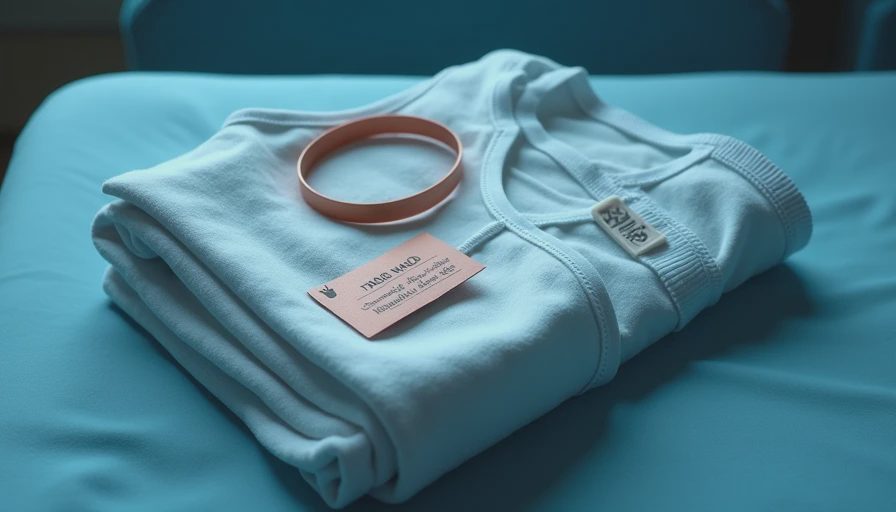
A beautiful newborn hospital outfit often reveals its quality through details that are almost invisible. Look for flat seams at the shoulders, neatly finished binding around the neckline, and cuffs that do not grip the wrist. Avoid loose ribbons, long ties, dangling cords, and decorative pieces that could detach. A tiny wooden button may look lovely in a photograph, but a smooth snap hidden beneath a placket is usually the more sensible choice for the first days.
Color matters, though not because a newborn needs a prescribed palette. Cream can look warm against a hospital blanket, pale blue-gray has a quiet watercolor quality, and muted terracotta brings a little earth into bright clinical light. If you choose white, inspect the fabric closely. Some whites are thin and translucent; others have enough density to look calm and polished after washing.
Wash the newborn hospital outfit before packing it, using a fragrance-free detergent and an extra rinse if your machine offers one. Skip fabric softener, which can leave a coating on fibers and add unnecessary scent. Dry the garment fully, then fasten every snap and zip it once so you know how it works before you are tired, tender, and holding a very small person.
Building the first outfit in layers
The most useful newborn hospital outfit is a small system rather than a single dramatic piece. Begin with a short-sleeved or long-sleeved bodysuit, depending on the season and the hospital's temperature. Add a footed sleeper or soft pants with a flexible waistband. A lightweight receiving blanket can provide an additional layer while you are indoors, but it should not be placed under the harness during the drive.
For a warm-weather arrival, cotton jersey and a simple bodysuit may be enough once the baby is settled. In colder weather, add a cardigan or blanket for carrying between the building and the car. Avoid puffy coats, thick bunting, and bulky outer layers beneath car seat straps; they can interfere with a snug harness fit. The car seat manual and hospital staff can help you confirm the safest arrangement.
A hat is often included in newborn packing lists, but its usefulness depends on the setting. Hospitals commonly provide one, and a baby should not be overheated. Pack a soft, lightweight option if you like the look, but treat it as an optional layer rather than the centerpiece. Socks can disappear quickly, so footed pajamas are often more practical than a carefully matched pair.

A practical packing plan for parents
Pack the newborn hospital outfit in a labeled pouch rather than at the bottom of a crowded overnight bag. Place the outfit, one backup, a diaper, and a receiving blanket together. This makes the change easier for a partner or nurse to find and protects the clothing from toiletries, chargers, and the loose geography of a hospital bag.
Bring one extra outfit for a very ordinary reason: newborns are talented at turning a clean look into a laundry problem. A backup does not need to coordinate perfectly. It can be a soft sleeper in a different color, chosen for comfort and easy washing. Include a small wet bag or reusable zip pouch for anything that comes home damp.
Try the outfit on a doll or folded towel if you want to rehearse the closures. Practice opening the garment from the bottom, checking the diaper area, and closing it without twisting the fabric. This is not about creating a perfect birth-day scene. It is about removing one small decision when the room is full of new information.
Choosing style without choosing a costume
When selecting a newborn hospital outfit, let one detail carry the visual interest. It might be a narrow stripe, a scalloped edge, a botanical print, or a beautifully colored binding. The rest can stay plain. This gives the eye somewhere to rest and leaves room for the baby's own presence, which will always be more compelling than an overloaded outfit.
I often return to the clothing in classic picture books: garments with clear shapes, gentle colors, and enough movement to look comfortable while a child is being held. That is a better reference than a heavily styled photograph. A newborn does not need a tiny version of an adult wardrobe. They need clothes that accommodate sleep, feeding, changing, and the tender choreography of being passed from one pair of arms to another.
The final check before leaving home
Before placing the newborn hospital outfit in your bag, check the fabric, closures, fit, weather, and car seat plan. Make sure the neckline is easy to open, the diaper area is accessible, and nothing decorative can scratch or loosen. Confirm that your chosen layers will not sit beneath the harness in a bulky way. Then fold the outfit with the blanket on top, ready for the first ride home.
The most successful choice is not necessarily the most expensive one. Brands such as Hanna Andersson, Burt's Bees Baby, Primary, and smaller independent makers offer different approaches to cotton weight, color, and construction, but the label is less important than the hand-feel and pattern. A thoughtful newborn hospital outfit makes the day gentler. It welcomes a child without asking them to perform, which is exactly how a first piece of clothing should begin.




No comments yet — be the first to share a thought.