Choosing flower girl outfits is less about creating a tiny replica of the wedding party and more about noticing the child who will wear them. Will they twirl? Will they sit comfortably through photographs? Does the fabric feel pleasant against the neck and arms? These questions have more to do with good design than with a particular trend. A well-chosen outfit frames a child without asking them to disappear inside it.
I like to begin with the mood of the ceremony rather than a shopping list. A garden wedding might welcome cotton voile, a soft floral, or a washed shade of blue. A formal evening gathering could call for silk-like satin, a crisp collar, or a velvet ribbon. The setting gives you a palette, but the child brings the point of view. Clothes should speak for the child, not over them.
Start With the Fabric, Not the Photograph
The first thing I check in flower girl outfits is the hand of the fabric. Hold the garment between your fingers. Does it feel papery, slippery, brushed, cool, or slightly rough? Children notice these details immediately, especially during a long ceremony when there is nowhere to hide from a scratchy seam.
Cotton lawn and cotton voile are lovely for warm-weather celebrations because they breathe and move lightly. Linen has a beautiful, relaxed texture, although it will crease, which is part of its character rather than a flaw. A cotton-linen blend can offer some of that natural slub with a little more resilience. For cooler months, corduroy, velvet, and brushed wool blends bring depth without requiring excessive decoration.
Look inside the garment, too. A smooth lining can make a structured dress comfortable, while exposed overlocking at the neckline can irritate even a child who usually tolerates clothing well. Check the zipper guard, waist seam, and armholes. A beautiful exterior is only half the story. The best flower girl outfits are considerate from the inside out.
Color Should Belong to the Child
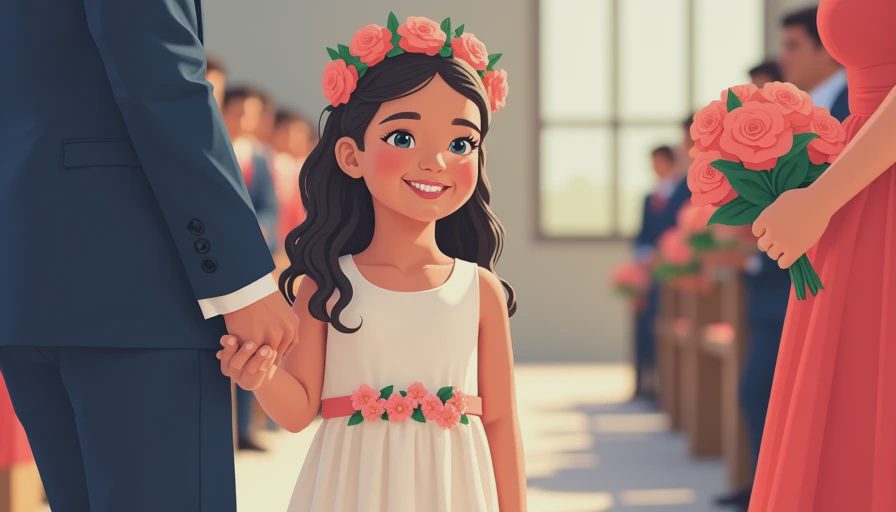
White is traditional, but it is not compulsory, and it is rarely the only beautiful option. Butter yellow, faded rose, moss, chambray, and soft apricot can sit beautifully beside flowers and formal tailoring. In natural light, muted colors often photograph with more dimension than a very bright shade. A child wearing dusty lilac may look completely different indoors under warm reception lighting, so hold swatches near a window before deciding.
I also like the quiet usefulness of an accent color. A rust ribbon, green socks, or blue Mary Janes can connect the outfit to the bouquet without making the child look coordinated from head to toe. If the wedding party has a strict color scheme, let the child wear one related detail rather than forcing every element to match. Flower girl outfits have more life when the palette leaves a little air around it.
Invite the child into the color conversation. Instead of asking, “Do you like this dress?” try, “Which color feels most like you?” A child may not have fashion vocabulary yet, but they know whether a color makes them feel bright, calm, serious, or ready to dance. That answer is useful information.
Shape, Movement, and the Ceremony Test
A ceremony outfit needs to work while standing, walking, sitting, kneeling, and carrying a basket. Before buying flower girl outfits, ask the child to perform these movements in something similar. Can they raise both arms? Can they walk without stepping on the hem? Does the waistband stay in place? If the answer is no in the fitting room, a wedding day will not improve the design.
A softly gathered skirt usually offers more freedom than a stiff, heavily layered one. A tea-length hem can feel polished while reducing the chance of a child catching a shoe. If the outfit is long, have the hem finished for the shoes they will actually wear. A two-inch difference can change the entire proportion of a small body.
Details should have a reason. A sash can define the waist, but it should not need constant retightening. Pockets are quietly brilliant for a handkerchief, a smooth stone, or a small flower found outside. Buttons are charming when they are securely sewn and easy for an adult to manage. The design should support the day, not create another task during it.
Shoes and Accessories Complete the Sentence
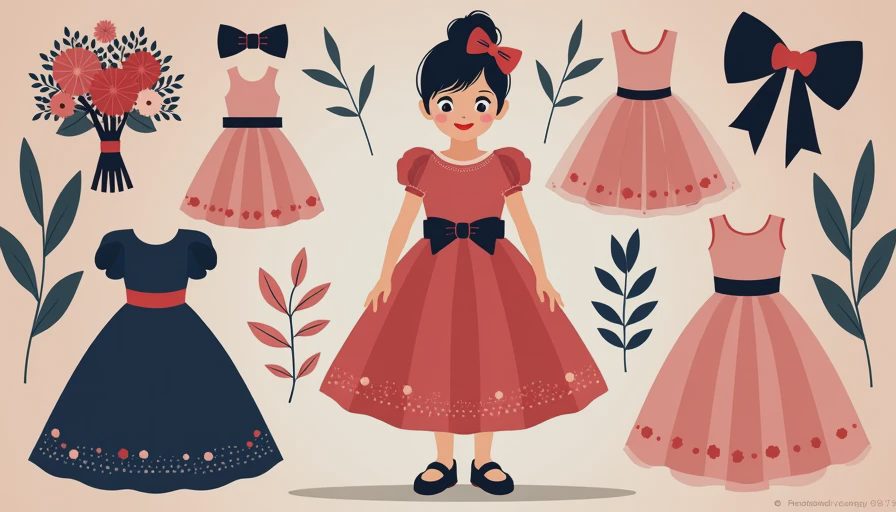
Shoes are often where a beautiful idea becomes impractical. New patent shoes can look wonderful in a photograph and feel unforgiving after twenty minutes. Whenever possible, choose a pair the child has worn enough to soften, with a secure strap and a sole that bends at the ball of the foot. Ballet flats, simple Mary Janes, low boots, and clean sneakers can all work, depending on the ceremony’s language.
Accessories should be edited with the same care as the outfit. A narrow ribbon, a small fabric bow, or a simple flower crown may be enough. Avoid anything that slips into the eyes, catches on branches, or needs to be held in place every few minutes. If a child dislikes hair accessories, a neat braid or a soft headband can feel more natural.
Socks deserve attention because they change the visual weight of the whole look. Ribbed cotton gives a classic feeling, while a lace-trimmed ankle sock adds softness without much fuss. Bare ankles can make a formal dress feel more modern. There is no single correct formula; proportion and comfort matter more than tradition.
A Practical Fitting Plan
Buy with enough time for a real trial, not just a quick mirror check. Have the child wear the complete outfit at home for thirty minutes. Add the shoes, socks, underlayer, hair accessory, and any cardigan planned for the reception. Watch what happens when they sit on the floor, reach for something, and move quickly from one room to another.
Then inspect the garment at child height. Look for a hem that twists, a collar that lifts, or a waistband that cuts across the stomach when sitting. Take a few ordinary photographs in daylight and indoors. You are not judging the child’s appearance; you are learning how the color, texture, and proportions behave in different light.
Have a backup plan that is equally thoughtful. A spare pair of tights, a cardigan, stain-removal wipes, and comfortable shoes can save the afternoon. If the event is outdoors, consider a light layer that complements the outfit rather than hiding it. The most successful flower girl outfits allow for weather, movement, and the small surprises children bring to formal occasions.
Let the Child Leave a Signature
The final choice can be polished without being precious. Perhaps the child selects a ribbon color, insists on glitter-free shoes, or adds a tiny embroidered initial inside the collar. These decisions do not weaken the look. They give it a pulse. Iris once rejected an otherwise lovely dress because the sleeves felt “too quiet,” then chose a simple cotton style with a bright pair of socks. She was right: the socks gave the outfit a point of view.
When reviewing flower girl outfits, ask whether the child looks present rather than costumed. You should see the expression first, then notice the fabric, color, and line around it. That is the quiet success of thoughtful dressing. A ceremony is a meaningful day, but it is still a day in a child’s life, full of grass, laughter, crumbs, photographs, and probably a determined dash toward something interesting.
Choose clothes that can accompany all of that. A beautiful flower girl outfit does not demand perfect behavior or constant adjustment. It gives a child enough comfort to participate and enough character to feel like themselves. That balance, more than a particular label or price, is what makes the memory beautiful.
No comments yet — be the first to share a thought.