Choosing girls formal dresses is less about creating a miniature adult and more about finding the meeting place between occasion, comfort, and personality. A child should be able to walk into a room and still look like herself: curious, lively, perhaps a little glittery, and entirely at ease. The right dress does not announce its price or perform sophistication. It gives a child room to move, notice, and be noticed for who she is.
I have spent years studying children's clothing from showroom racks to family closets, and the distinction matters. Special-occasion dressing can be beautiful without becoming stiff. A softly gathered skirt, a collar with pleasing proportion, or a color that changes in afternoon light often does more than a row of sequins ever could.
Begin with the occasion, not the costume
Before looking at girls formal dresses, name the setting in plain language. Is this a garden wedding, a school concert, a holiday dinner, a family portrait, or an evening ceremony? Each one suggests a different degree of polish. A cotton voile dress with a narrow sash can be perfect for an outdoor afternoon, while velvet or a silk-blend fabric carries more visual weight for winter.
The venue also tells you something about movement. A child attending a wedding may sit through a ceremony, climb stairs, eat cake, and dance near the reception band. A concert outfit needs a neckline and hem that will not distract during performance. For family photographs, consider colors that separate gently from the background rather than disappearing into it.
This is where parents can offer vocabulary instead of rules. Ask, Does this feel airy or warm? Does the color look different near the window? Would you rather have a full skirt or a straighter shape? Those questions help a child develop an eye, not simply accept an outfit chosen for her.
Fabric is the first sign of quality
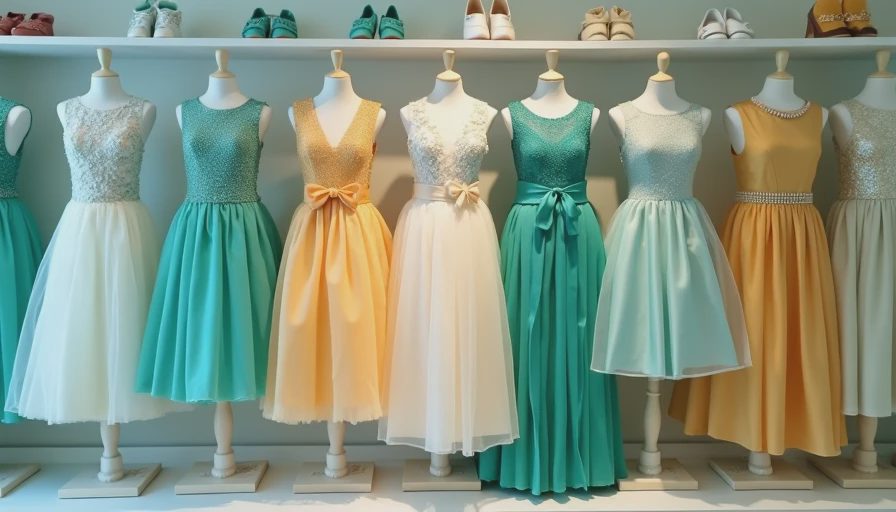
With girls formal dresses, fabric hand matters before decoration. Hold the garment near a window. Does the material fall in a clean line, or does it collapse into a shiny, noisy puddle? Does the lining feel smooth against the skin? Can the child bend her elbows without the bodice pulling across the back?
Cotton poplin has a crisp, storybook quality and works beautifully for daytime events. Tulle creates a light, floating silhouette, though it should be layered over a soft lining rather than allowed to scratch. Velvet brings depth to navy, plum, forest green, and warm brown. Satin catches light dramatically, but low-quality satin can cling, snag, and reveal every wrinkle.
For warm-weather events, breathable cotton, linen blends, and lightweight gauze are kind choices, especially in humid places such as Savannah. For cooler months, wool-blend cardigans, velvet shoes, or a fine knit wrap can add warmth without burying the dress beneath a bulky coat. The best girls formal dresses make physical sense for the season.
Look closely at proportion and construction
A beautiful silhouette is not necessarily a complicated one. I look first at shoulder width, armhole placement, and the relationship between the bodice and skirt. Girls formal dresses should allow a child to lift her arms, sit comfortably, and take a full stride. If the waist sits too low, the dress can feel borrowed from an older age group. If the skirt is excessively wide, it may overwhelm a smaller frame.
Inspect the seams inside. A cleanly finished seam, secure zipper, and covered waist seam tell you more than a decorative flower attached at the hip. Buttons should be firmly sewn, hems should hang evenly, and embellishments should not catch easily on a chair or another child's sleeve. A partial lining is useful when it keeps the fabric from clinging; it is less useful when it adds heat and stiffness.
Sizing deserves attention, too. Buying several sizes up often produces dropped shoulders and an awkward waist rather than useful growing room. Instead, look for adjustable straps, a modest back allowance, or a sash that can be tied without distorting the shape. Girls formal dresses should fit the child who is wearing them now.
Color can carry the whole look
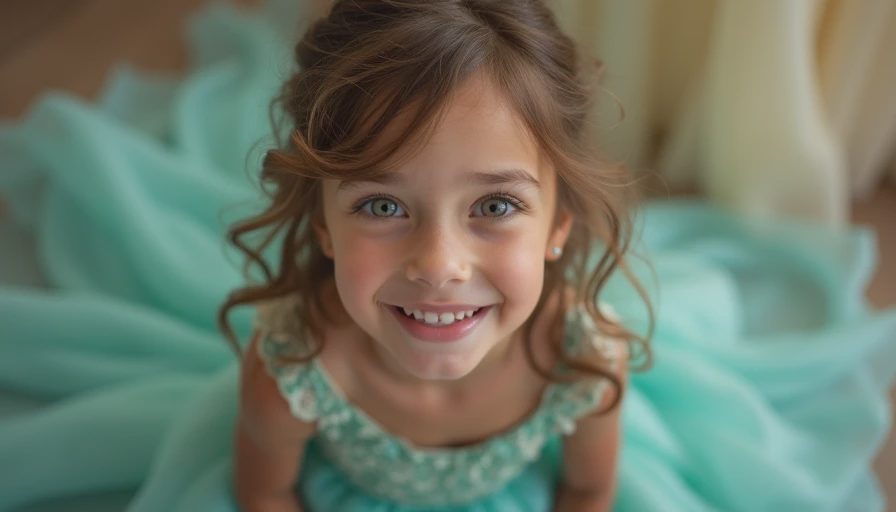
When parents ask me about girls formal dresses, I often suggest starting with color before silhouette. Color is immediate, personal, and wonderfully changeable in natural light. A dusty rose may appear warm beside cream walls and cooler outdoors. Ink blue can feel formal without being severe. Butter yellow, soft green, or a clear red can give a simple dress its own point of view.
Let the child respond to the palette. She may gravitate toward a color you would never have selected, and that instinct is worth hearing. Iris once rejected a perfectly respectable pale blue dress for a deep marigold one because, as she explained, it looked like a flower that had decided to be loud. She was right. The marigold made the simple shape feel alive.
Accessories should complete the thought rather than compete with it. A velvet ribbon, polished Mary Janes, small pearl-free studs, or a cardigan in a related shade may be enough. If the dress already has embroidery or beading, choose quieter shoes and hair. Girls formal dresses do not need every styling idea applied at once.
Brands, budgets, and the useful middle ground
Price is a poor substitute for observation. Some independent children's labels produce excellent construction at $80 to $160, while a $250 dress can still have scratchy trim or a careless lining. Department stores, consignment shops, and small boutiques each offer different strengths. Names such as Tea Collection, Hanna Andersson, and Boden are often useful starting points for color and practical construction, while occasion-focused labels may offer more elaborate fabrics and finishes.
Set a budget before shopping, then spend where the child will feel the difference: a soft lining, a dependable closure, and fabric that holds its shape after an evening of movement. If the dress will be worn once, resale or consignment can make sense. A classic navy, cream, or berry dress may also serve for portraits, recitals, and holiday gatherings with a change of shoes and sweater.
Read care instructions before falling in love. Dry-clean-only clothing is not automatically superior, but it does add time and cost. A washable cotton dress that remains lovely after several celebrations may be the wiser purchase.
Make the fitting part of the experience
Try girls formal dresses at least a week before the event, not on the morning of it. Have the child sit, walk, reach, turn, and raise both arms. Check whether the neckline stays in place and whether the hem catches beneath her shoes. Let her wear the intended undergarments during the fitting; a different layer can change both comfort and drape.
Take a short walk outside if possible. Natural light reveals color more honestly, and movement shows whether the skirt sways or simply rides upward. Ask what she notices first. Her answer may be the sleeve, the softness, a pocket, or the fact that the dress spins. That detail is valuable information, not a distraction.
Pack a small repair kit with a safety pin, stain-removing wipe, and spare tights if needed. Choose shoes that have already been worn indoors. No occasion is improved by a child concentrating on a blister or a scratchy seam.
The quiet test of a special-occasion dress
The strongest girls formal dresses support the child rather than replacing her. They have enough structure to feel considered, enough softness to invite movement, and enough restraint to leave space for expression. A child might add a handmade bracelet, refuse the matching hair bow, or insist on wearing bright socks beneath polished shoes. Those choices are part of the finished picture.
When you shop, look for evidence: thoughtful fabric, balanced proportion, comfortable construction, and a color that makes the child stand a little taller. Then listen to her response. Clothes should speak for the child, not over them. That is the real elegance of dressing for a special day.




No comments yet — be the first to share a thought.