The Day I Stopped Sorting
When Iris was around four, I stood in front of her closet doing my usual reorganization. I caught myself automatically moving the “boy” shirts to one side and the “girl” ones to another. Then I stopped.
Why was I doing this? The dinosaur shirt didn’t know it was marketed to boys. The floral dress didn’t know its target demographic. They were both just clothes — soft, colorful, potentially useful for an active child with strong opinions.
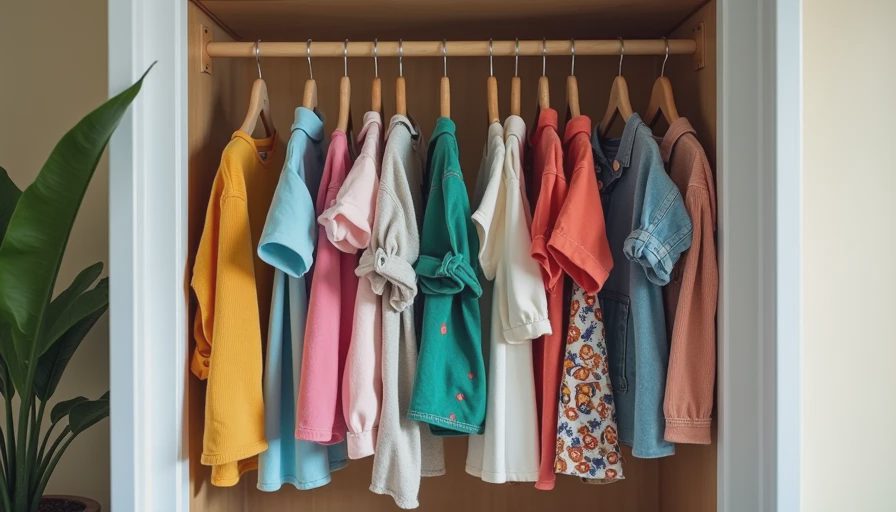
So I stopped separating them. Everything went into one flowing collection organized by type, color, and season instead of gender.
What Actually Happened
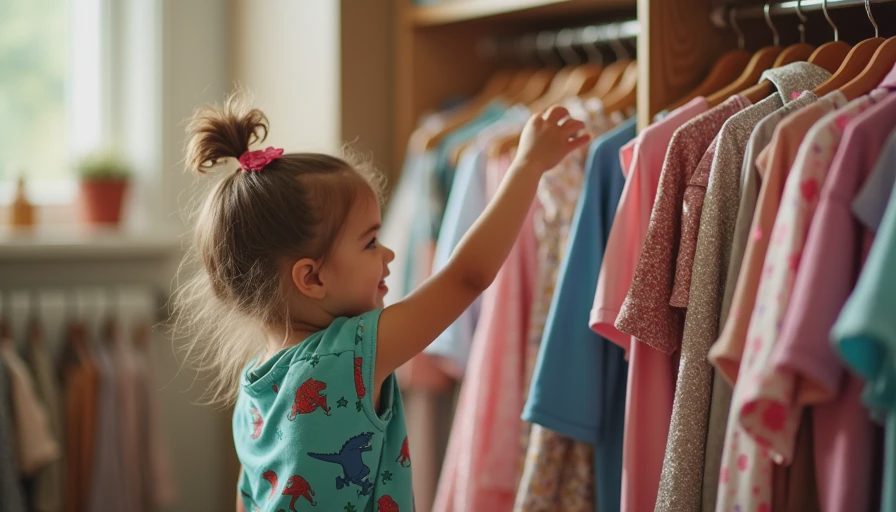
The sky did not fall. Iris did not become confused about her identity. She simply gained more choices.
She started mixing elements freely — the sparkly skirt with the dinosaur shirt, the “boy” cargo shorts with her favorite twirly top. Her combinations were often more interesting than anything I would have put together.
More importantly, she began making choices based on texture, color, comfort, and mood rather than whether something was “for girls.”
The Marketing Trap We’ve Internalized
Children’s clothing marketing is incredibly segmented. Walk into most stores and you’ll see clear divisions: pink sparkly everything on one side, blue trucks and dinosaurs on the other.
But children’s interests and preferences don’t actually divide so neatly. Plenty of girls love dinosaurs. Plenty of boys love sparkles. And many children love both, or neither, or something else entirely.
By removing the artificial divide in our own home, we gave Iris permission to explore without the invisible walls that marketing tries to build.
The Practical Reality
Our system is simple:
All clothes are available
Choices are guided by weather, activity, and comfort
We talk about how clothes feel and move rather than who they’re “for”
Iris has the final say within reasonable boundaries
This approach has reduced decision fatigue for both of us. There’s no mental sorting happening before she even gets to choose.
What I’ve Observed in Iris
She moves through her closet with confidence and creativity. She doesn’t ask if something is “for girls.” She asks if it feels good, if she can move in it, if the color makes her happy.
She’s developing her own aesthetic language that isn’t filtered through someone else’s ideas about what girls should like. That feels like freedom to me.
Addressing the Concerns
I’ve had gentle conversations with family members who worry this approach might confuse her. My response is always the same: Iris knows she’s a girl. What she wears doesn’t change that fundamental truth.
Clothing is not identity. It’s self-expression. Giving her more options for expression hasn’t created confusion — it’s created confidence.
The Broader Conversation
This isn’t about making a political statement. It’s about practical parenting and respecting a child’s developing autonomy and taste.
Children are bombarded with messages about what they should like based on their gender. Creating one small space where those messages are absent feels like a gift.
How This Connects to Quality
Interestingly, removing gender categories has made me even more focused on quality. When everything is available, the well-made pieces naturally rise to the top regardless of their original marketing.
A great pair of pants is a great pair of pants. A beautifully constructed shirt is worth having whether it has trucks or flowers on it.
The Joy of Open Possibility
Watching Iris put together outfits without artificial limitations has been one of the quiet joys of parenting her. Her style is becoming uniquely hers — a mix of soft feminine elements, playful patterns, practical pieces, and whatever sparks her interest on any given day.
That feels like the healthiest possible outcome.
Clothes should speak for the child, not over them. When we stop telling clothes who they’re allowed to speak to, children get to decide for themselves what they want to say.
And Iris, at eight, has quite a lot to say — in whatever combination of colors, patterns, and styles feels right to her that day.


No comments yet — be the first to share a thought.