On Saturday mornings in Forsyth Park, I watch families unfold across the grass in all kinds of coordination. A mother and daughter in sunflower prints. Two brothers in the same faded blue tee. There is something heart-stoppingly sweet about matching outfits — a visual rhyme, like a chord that finally resolves. But after eight years buying children's clothing for Nordstrom, I also know how easily that rhyme can turn into a parent talking over a child. The good news is that this kind of coordination doesn't have to mean identical uniforms. They can be a conversation, a shared color, a small wink between two people who are entirely themselves.
Why We Crave Matching Outfits
We want to belong to our people. When a family steps into a room in coordinated color, it reads as a unit — a clan, a team, one heartbeat. In my Savannah styling studio, parents bring me photos of old family gatherings and tell me they want that same feeling for holidays, birthday parties, and ordinary Sunday afternoons. The desire is not wrong. The problem comes when the matching becomes louder than the child. Iris, at eight, will happily match my sneakers or wear the same cream linen as me, but she refuses to be my miniature. She has her own eyes, her own skin, her own opinions about what counts as a coat.
That is exactly how it should be. The grown-up job is to offer a frame, not to fill in the picture. I tell parents to look at the child's face before they look at the clothes. If the outfit makes the child beam, it is right. If it makes them shrink, it is wrong, no matter how beautiful the fabric.

The Rule of One: One Shared Thread
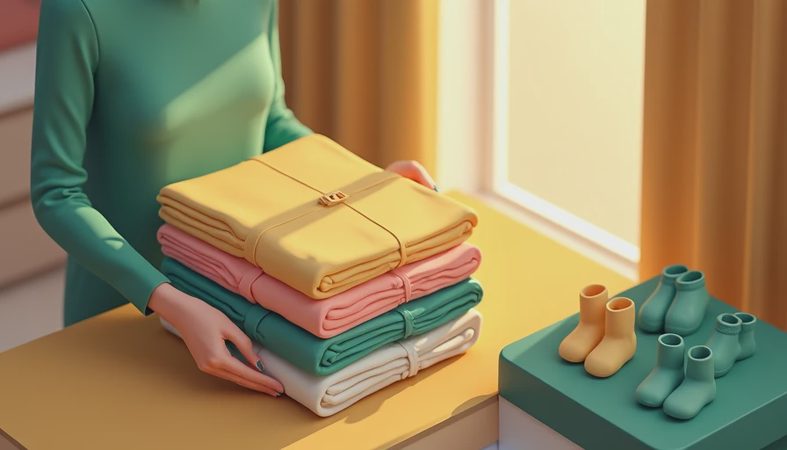
Instead of copying every button and seam, try the Rule of One. Choose a single element — a color, a print, a texture — and let everything else belong to the individual. For a family picnic, set a palette: moss green, warm cream, faded denim. Each person shops or pulls from their own drawer. I lean toward rustic linen; Iris will choose the same cream but add a ruffle, a fox print, or her favorite glittery sneakers. The result is matching outfits in spirit, not in uniform. You get the harmony without the negotiation, and you might even discover that your child's instinct for color is better than yours.
Sibling Matching Outfits That Respect Each Personality
Siblings are not a matching set. I learned this watching friends' kids in Savannah, and from all the families who come to me for wardrobe edits. When you have two children, avoid the obvious move of buying two identical shirts. Instead, buy from the same color story or the same small label's collection, but choose different silhouettes. A swing dress for one, an overall for the other. A long-sleeve tee for the child who gets cold, a sleeveless version for the one who runs hot. If you love a particular floral print, look for it in a skirt for one and a button-down for the other. The family resemblance comes through the shared language, not through carbon copies. I once worked with a mother of two — a seven-year-old who lived in overalls and a four-year-old who would only wear dresses. We found a tiny brand that made the same gingham in both a romper and a pinafore. The day she sent me a photo of them standing in the garden, I almost cried. They looked like themselves, and they also looked like a family.
Parent-Child Matching Outfits: The Art of Coordinating
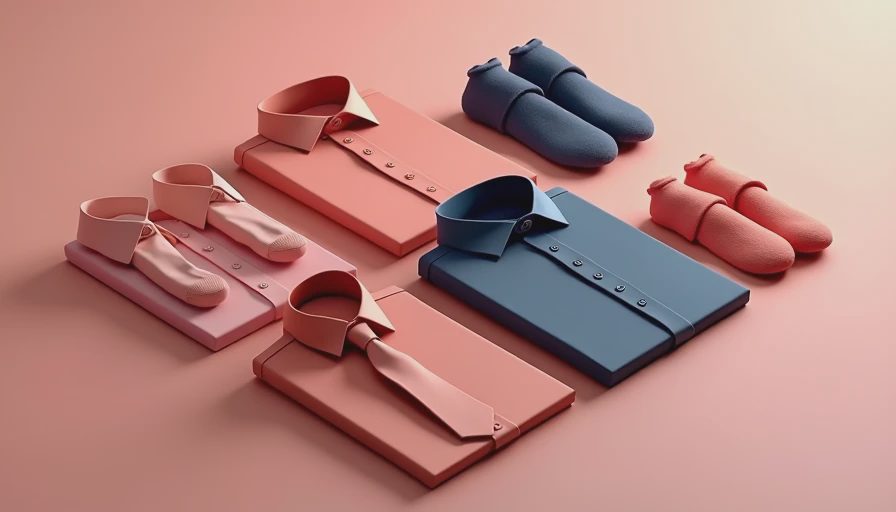
Parent-child matching outfits have a special pull, especially for younger kids who still think you hang the moon. But the most successful versions are coordinated, not cloned. If you are dressing for a birthday party, match the texture story: both of you in ribbed cotton, or both in the same shade of ochre. Match the plaid of your shirt to her skirt. Match your socks to his socks and let the rest of the outfits go their own way. The eye finds the echo, and the echo is what delights. Nobody needs to be told, "we bought the package." The joy is in the secret, not the announcement.
A Simple Checklist for Matching Outfits That Feel Right
Before you commit to matching outfits on a school morning or a photo day, take a breath and ask a few honest questions. Does my child feel comfortable in this fabric? Can they run, climb, sit cross-legged on the ground, use the bathroom without help? Does the matching element feel like a choice, or does it feel like a costume? Does each person still look like themselves? If the answers are yes, go ahead. Then let the child accessorize. Iris once wore a tuxedo vest over a tie-dye dress for our holiday card, and the only matching element in the whole photo was our bright yellow socks. It is still my favorite picture of us.
When to Skip Matching Outfits Entirely
Sometimes the kindest decision is to skip matching outfits altogether. A child's style is a language they are learning to speak, and if every outfit says "we belong," they never get to say "I am me." So let Monday be a free day. Let the preschooler wear rain boots with the party dress. Let the tween claim the hand-me-down band tee with the faded logo. Let the baby wear the too-small sweater because they refuse to take it off. Save the coordinated looks for moments that truly call for ceremony — a wedding, a holiday, a family portrait above the fireplace. When you do dress together, let the matching be a whisper, not a shout. Clothes should speak for the child, not over them. That is the kind of family style I want to see in the park.
No comments yet — be the first to share a thought.