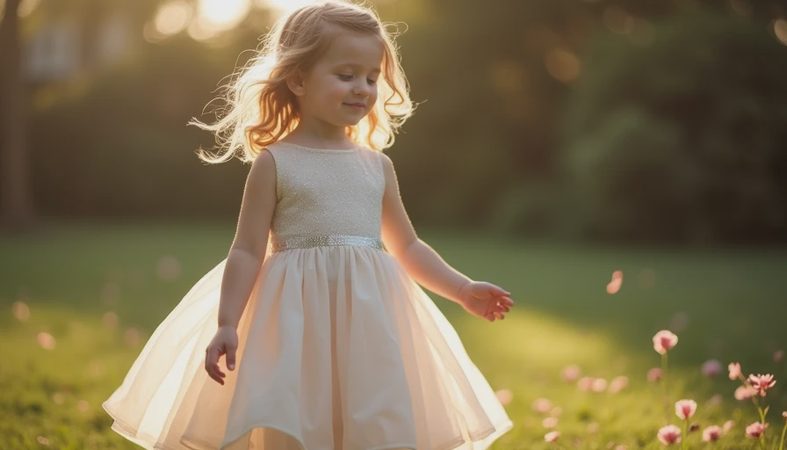
Toddler dresses are often treated as tiny occasions for decoration: a bow here, a ruffle there, perhaps enough tulle to make sitting down impossible. I prefer to begin somewhere quieter. What does the garment feel like in a child’s hands? How does it move when she runs through a fountain, or when he crouches to inspect a beetle in the garden? The right piece gives a child room to be present. Clothes should speak for the child, not over them.
Start with the fabric, not the picture
A product photograph can show a lovely silhouette, but it cannot tell you whether the fabric is clammy, stiff, or rough at the neck. For everyday toddler dresses, look for cotton jersey, soft poplin, linen-cotton blends, or fine corduroy in cooler months. Jersey has a gentle give that works well for climbing and floor play. Poplin holds a cleaner shape, while linen blends bring a beautiful, slightly rumpled texture without feeling precious.
Turn the garment inside out when possible. Seams should lie flat, armholes should not pull, and the neck opening should allow a child to dress with some independence. A lining can make a special dress more comfortable, but it should be smooth rather than noisy or scratchy. Iris has rejected beautiful clothes for less than a badly placed tag; she is usually right. Comfort is not a compromise in toddler clothing. It is what allows the design to be worn as intended.
Color deserves the same attention. A dusty blue can look gray in a store and luminous in afternoon light. Marigold, berry, moss, and faded rose often pair easily with existing sweaters and leggings. Before buying, imagine the dress with shoes, a cardigan, and the inevitable grass stain. The loveliest wardrobe pieces are not necessarily pristine ones. They are the ones that become familiar.
Shape should follow movement
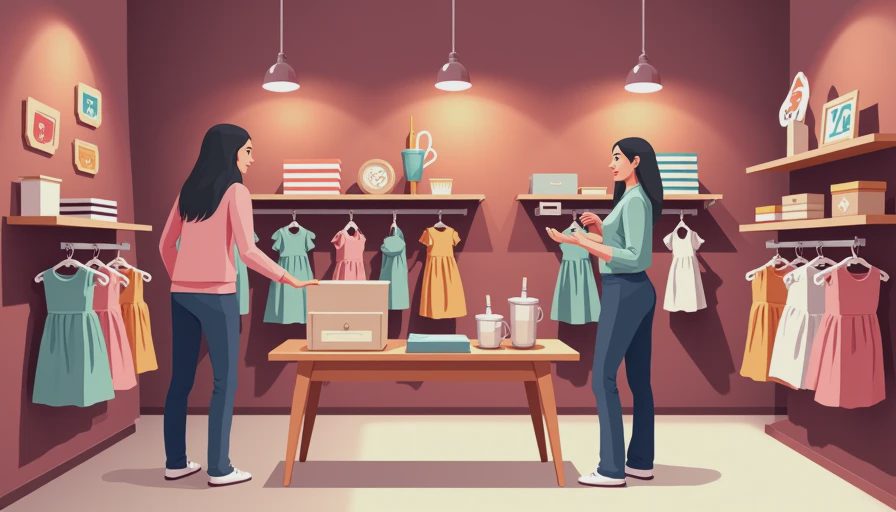
The most successful toddler dresses have a little architecture and a lot of generosity. A gathered waist creates movement without restricting the middle. A gentle A-line shape leaves room for a diaper, pull-up, or energetic stride. Tiered skirts can be charming when the tiers are soft and proportionate; excessive volume tends to catch on chairs and overwhelm a small frame.
Pay attention to shoulder construction. Wide straps are usually more stable than delicate ones, and adjustable buttons can extend a garment through a growth spurt. A back opening is useful only when it does not create a stiff panel against the skin. For younger children, a dress that slips over the head easily may be more practical than one with a long row of buttons.
This is where toddler dresses differ from miniature adult clothing. A child is not standing still to display a silhouette. They are bending, carrying rocks, dancing in the kitchen, and changing their mind about socks. The design should accommodate all of that activity. If a dress looks beautiful on a hanger but requires constant tugging, it is not doing its job.
Build outfits around a child’s vocabulary
Instead of presenting a child with an entire closet, offer two or three thoughtful choices. You might say, “Would you like the green dress with the soft cardigan, or the striped one with your red shoes?” This gives a child language for preference without turning dressing into a performance. Some children notice color first; others care about pockets, sleeves, shine, or the sound a fabric makes when they move.
Pockets are a small design decision with enormous emotional value. A toddler can fill them with a smooth stone, a wooden animal, or one fallen camellia petal. Look for pockets that are securely sewn and large enough to be useful without dragging the skirt down. Embroidery and prints can also offer an entry point into storytelling. A dress with tiny pears might lead to a conversation about orchards; a block print can resemble a picture-book landscape.
I am fond of brands such as Hanna Andersson for sturdy everyday knits, Tea Collection for travel-friendly prints, and Primary when a simple color gives the child more room to assemble the look. None is automatically right for every family or every child. The useful question is whether the garment has a clear point of view while leaving space for the person wearing it.
Match the dress to real life
A special-occasion dress should still permit ordinary human behavior. For a wedding or family photograph, cotton voile, embroidered poplin, or a soft smocked bodice can feel polished without becoming formal armor. Check the care instructions before committing to pale colors or intricate trims. A dress that requires dry cleaning is rarely a sensible choice for a toddler, no matter how lovely the collar.
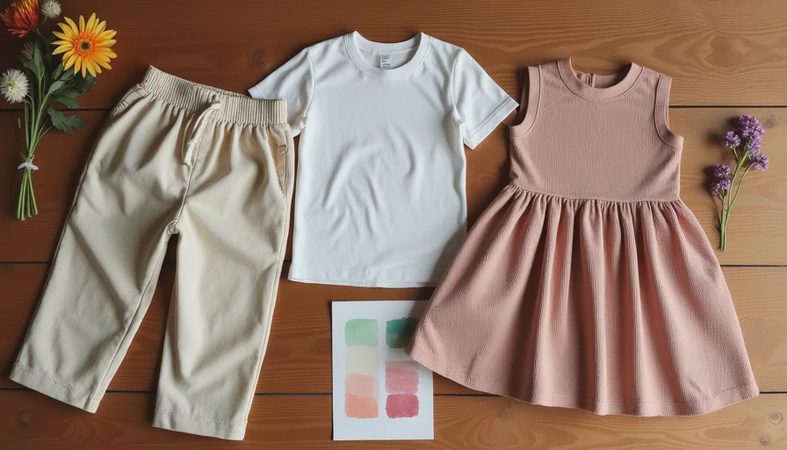
For daycare, travel, and weekends, choose toddler dresses that can survive frequent washing. Dark florals, small-scale patterns, and medium tones are forgiving companions. Pair a sleeveless style with a ribbed tee in fall, or add leggings beneath it when the playground is damp. In hot weather, loose cotton and linen blends help air circulate. In cold weather, corduroy and knit layers bring warmth without relying on a heavy, stiff skirt.
Think in outfits rather than isolated purchases. One blue dress that works with tan sandals, navy tights, and a faded denim jacket may earn more wears than three occasion pieces. A simple dress also gives accessories a child-sized role: a bright sock, a handmade hair clip, or a cardigan chosen for its unusual buttons.
Inspect quality in five quiet places
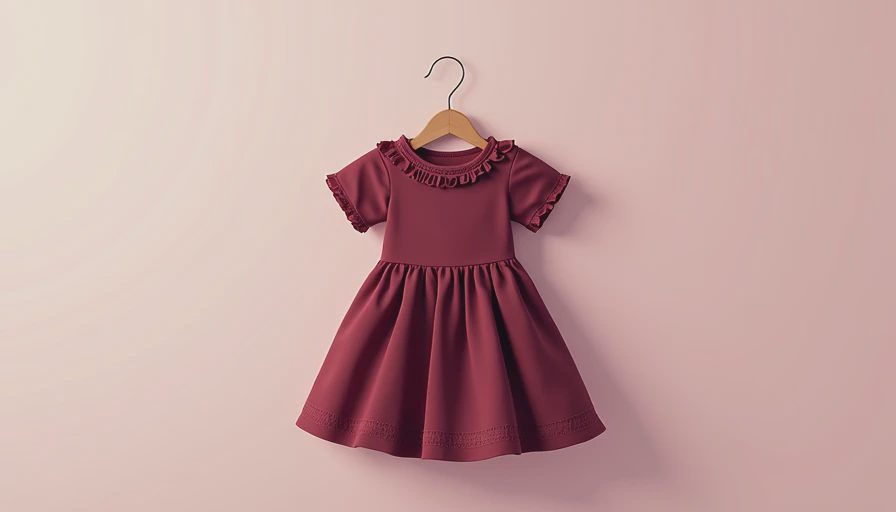
When I evaluated children’s clothing professionally, I learned that quality often reveals itself in details no photograph advertises. First, examine the seam allowance. It should be even, with no loose threads gathering at stress points. Next, look at the fabric recovery: gently stretch a knit and see whether it returns to shape. Check the stitching around pockets, buttons, and snaps, because those areas receive the most enthusiastic use.
Then consider the hem. A properly finished hem hangs cleanly and does not twist after washing. Look at the label placement, especially at the back neck, and feel for rough edges. Finally, hold the dress by its shoulders. Does the skirt fall evenly, or does one side pull forward? A crooked hang usually becomes more obvious on a moving child.
Price can reflect better construction, but it is not proof of it. A $32 cotton dress with thoughtful seams may outlive a $95 piece burdened with trim. Read fiber content, study measurements, and use reviews for practical clues such as shrinkage or a narrow neck opening. The buyer’s eye is simply the habit of looking twice.
Make room for the unexpected favorite
Parents often reach for the dress they can imagine in a photograph. Children frequently choose the one with the least obvious charm: a tomato-red corduroy style, a faded print, or a pocket placed exactly where a hand wants to rest. That preference is information. It tells you something about the child’s developing visual language.
Iris once ignored a beautifully smocked dress for a plain violet one with an uneven hemline and two enormous pockets. She wore it for weeks with striped socks and a cardigan the color of oatmeal. In motion, the outfit made perfect sense. The violet deepened in the shade, the socks added rhythm, and the pockets gave her somewhere to keep her treasures. That is the difference between styling a child and listening to one.
Choose toddler dresses for their hand-feel, proportion, and usefulness, then leave enough room for interpretation. A closet does not need to be large to feel generous. It needs pieces that wash well, move easily, and invite a child to participate. When those conditions meet, getting dressed becomes less about arranging an image and more about discovering a person.

No comments yet — be the first to share a thought.