Flower girl dresses are often treated as tiny versions of bridalwear, but a child is not a miniature adult. The right dress should feel special without turning her into a centerpiece she did not choose to be. I look for clothing with a clear point of view, then leave room for the child’s own mannerisms, questions, and excellent opinions. Clothes should speak for the child, not over them.
At a wedding, that usually means balancing ceremony with movement. A dress can have a beautiful neckline and still allow a child to sit cross-legged during the vows. It can photograph beautifully in afternoon light and remain comfortable through cake, dancing, and the long ride home. That balance is where a buyer’s eye becomes useful.
Start with the child, not the color palette
Before opening a shopping tab, ask what the child already reaches for. Does she like a skirt that swishes when she spins, or does she prefer a simple shape with pockets? Does she avoid anything stiff at the waist? Is she drawn to butter yellow, faded blue, deep green, or the particular pink of a rose petal after rain? Those answers are more helpful than a wedding board labeled “classic.”
Flower girl dresses can harmonize with a ceremony without matching every table linen. A child in soft moss green beside white flowers can look more considered than a child dressed in an exact shade selected from a color chart. Likewise, ivory, cream, pale peach, and washed lavender each behave differently in photographs. Natural light reveals undertones that a phone screen often flattens.
Iris once rejected a dress I thought had an exceptionally lovely collar because, as she explained, “It makes my neck feel busy.” She chose a plain cotton dress with a narrow ribbon instead. In motion, it was unmistakably hers. That is the kind of decision worth protecting.
Read the fabric before the label
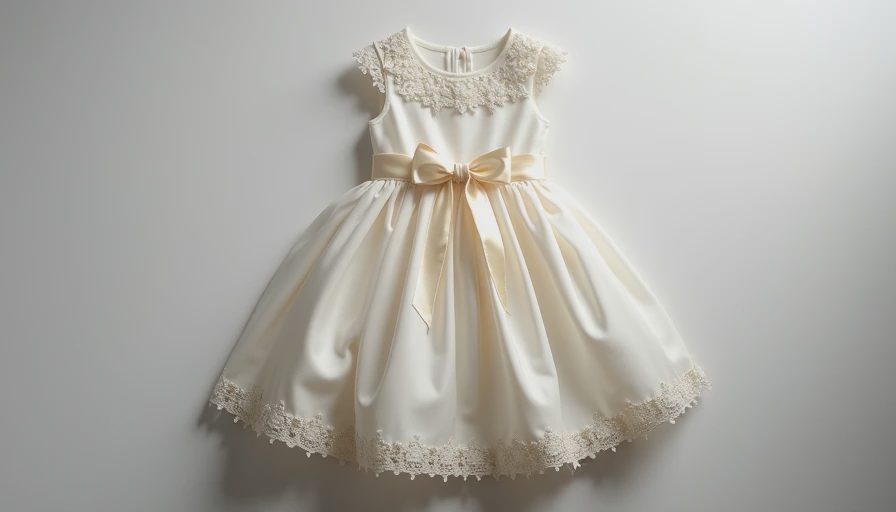
The hand of a fabric tells you almost everything. Cotton voile feels airy and moves quietly. Linen has a beautiful irregularity and becomes softer with wear, though it will crease as a child lives in it. Tulle creates volume, but several layers can become scratchy or warm. Satin catches light beautifully, yet it may cling, snag, or feel slick against the skin.
For a summer wedding in Savannah or another humid place, flower girl dresses made from cotton, linen blends, or lightweight rayon can be more gracious than heavily layered polyester. For a winter ceremony, velvet or a substantial cotton blend offers visual depth and warmth without requiring a stiff underskirt. Check the lining as carefully as the outer fabric. A lovely bodice with rough seams is still an uncomfortable bodice.
Look closely at the seam finishing, too. French seams or neatly bound edges generally feel smoother than exposed overlocking. A zipper should lie flat, and a sash should not be so narrow that it twists every time the child bends. These details rarely appear in a product photograph, which is why a clear return policy matters when shopping online.
Choose a silhouette with room for real life
The prettiest flower girl dresses have a little generosity built into their shape. A gently gathered waist, an A-line skirt, or a simple empire seam gives a child room to walk, kneel, and carry petals without constant adjustment. A fitted waist can look polished, but only when it does not dig in after dinner.
Length deserves practical attention. Floor-length hems can trail beautifully down an aisle, but they also catch on steps and shoes. Tea length often offers the most useful compromise: enough ceremony to feel distinct, enough clearance for running toward a cousin after the photographs. If the dress must be altered, leave enough hem to preserve its original proportion. A shortened skirt can change the entire balance of a design.
Sleeves are part of the experience as well as the picture. Cap sleeves can feel fresh in warm weather, while a soft puff sleeve adds shape without restricting the shoulder. If a child dislikes anything around the upper arm, sleeveless is not a failure of formality. A cardigan, cropped sweater, or delicate jacket can create the finished look.
Let the accessories stay quiet
Accessories should support the dress rather than compete with the child. A velvet ribbon, small bow, or pair of satin flats may be enough. Fresh flowers woven into a loose braid can be lovely, but avoid anything sharp, heavy, or likely to fall during the ceremony. Floral crowns are beautiful when a child enjoys wearing them and distracting when she does not.
Shoes need their own fitting session. New patent leather flats can rub at the heel, and decorative sandals may not provide enough stability on grass or uneven pavement. Have the child walk, squat, and climb a few steps in the shoes before the event. A familiar pair of polished Mary Janes or clean leather sandals often looks more natural than an elaborate shoe worn cautiously.
The same principle applies to flower girl dresses with dramatic sleeves, large bows, or a full skirt. If the child keeps tugging at one feature in the fitting room, believe that information. Comfort is not an aesthetic compromise; it changes posture, expression, and the way a child moves through a photograph.
Consider the wedding without borrowing its anxiety
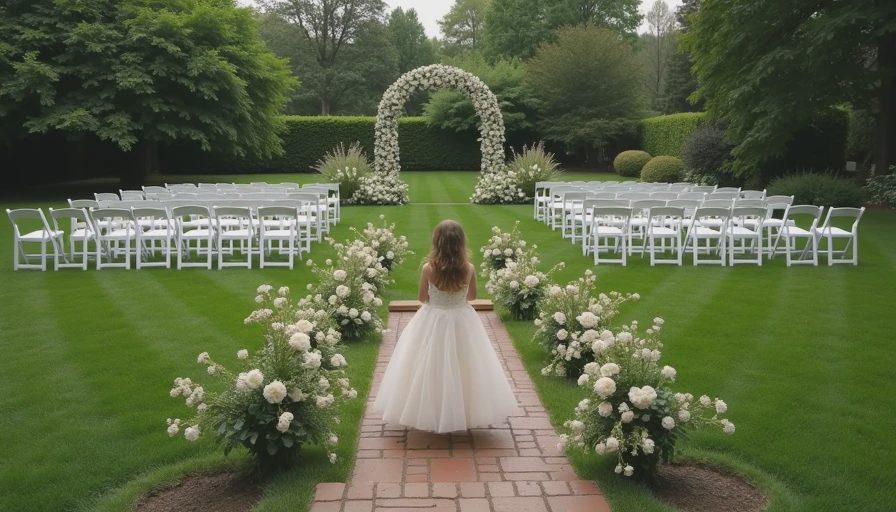
A ceremony may be formal, garden-inspired, seaside, or held in a courthouse with dinner afterward. The dress should understand the setting, but it does not need to perform a theme. For a garden wedding, cotton embroidery or a muted floral print can echo the surroundings. For a city ceremony, a clean crepe shape or a simple silk-blend sash may feel more at home. At a beach, lightweight fabric and secure shoes matter more than embellishment.
This is also where timing helps. Order flower girl dresses early enough for a calm fitting, especially if the child is between sizes. Measure the chest, waist, and height, then compare those numbers with the garment’s actual size chart rather than assuming a familiar age label will fit. Children grow unevenly; a dress that fits beautifully in the shoulders but needs a hem is often easier to adjust than one that is tight through the bodice.
For a budget-conscious choice, spend on fabric and fit before decoration. A $70 cotton dress with a clean lining can look more thoughtful than a $180 dress covered in appliques that irritate the skin. Brands such as Hanna Andersson and Tea Collection are often useful reference points for practical construction, while independent occasionwear makers may offer more distinctive fabrics and proportions. The label matters less than what the garment is doing.
Make the fitting a conversation
Try the dress on at a quiet time, not ten minutes before leaving for the rehearsal. Ask the child what she notices first. Does she like the color in daylight? Can she lift both arms? Can she sit comfortably? Is there anything scratchy, tight, slippery, or noisy? These questions give children a vocabulary for their own preferences without turning the fitting into a test.
Flower girl dresses are part of a memorable day, but they are not a measure of how well the day goes. A child may scatter petals unevenly, hold the basket upside down, or decide halfway down the aisle that walking beside a trusted adult is preferable. The clothing should accommodate that humanity. When the fabric moves easily and the details feel familiar, the child has more space to be present.
I still think about Iris’s plain cotton dress with the “busy” collar. It was not the dress I would have selected from a rack, but it framed her face, survived an afternoon in the park, and made her stand a little taller because she had helped choose it. That is the quiet magic I want from flower girl dresses: beauty that leaves the child visible.


No comments yet — be the first to share a thought.