Toddler boy clothes are most successful when they make room for movement, mess, and a small person’s growing point of view. At this age, a shirt is not simply a shirt. It is a cape, a picnic blanket, a hiding place, or the thing that feels wrong the moment a child pulls it over his head. After years buying children’s apparel, I look first at hand-feel, seam placement, and the quiet usefulness of a garment. Clothes should speak for the child, not over them.
Begin with the hand-feel
A toddler’s wardrobe needs fabrics that invite contact rather than resist it. Look for cotton jersey with a soft, substantial surface, lightweight canvas that becomes more comfortable with washing, and linen-cotton blends that breathe on warm afternoons. A fabric can be beautiful on a hanger and still be a poor companion for a three-year-old if it feels crisp at the neck or catches behind the knees.
For everyday toddler boy clothes, turn the garment inside out before buying. Run your fingers across the inside of the collar, inspect the overlock stitching, and look for a printed label instead of a scratchy tag. Ribbed cuffs should recover after being stretched, while elastic waistbands should lie flat without digging. These details are not precious; they are the difference between an outfit that lasts through a morning at the playground and one abandoned beside the front door.
Fit deserves the same attention. A little room through the body and thigh is useful, but excessive fabric can catch on climbing equipment. Choose trousers that allow a full squat and tops that stay below the waistband when a child reaches overhead. Adjustable waist tabs are particularly helpful because toddlers often grow in sudden, surprising intervals.
Build a small color vocabulary
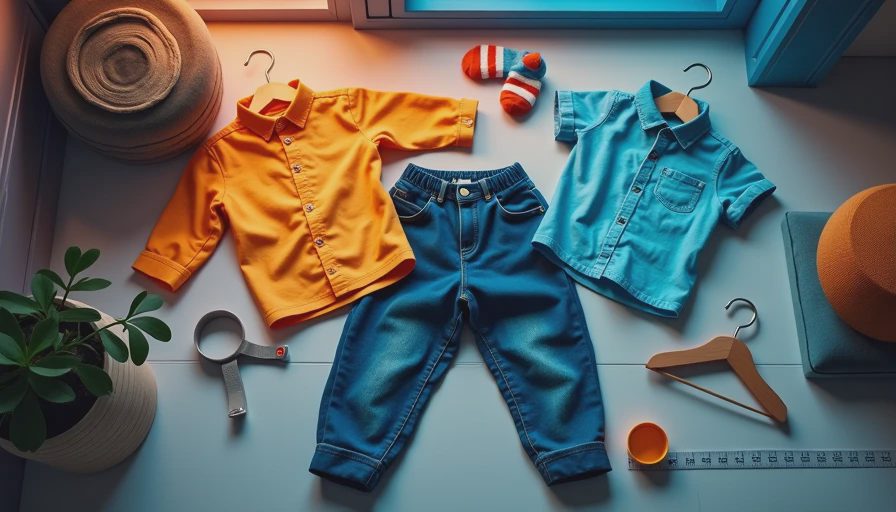
Color is one of the gentlest ways to help a child discover preference. Instead of making every outfit navy, gray, or bright primary color, place several shades together and notice what attracts him. A faded marigold sweatshirt can warm a blue chambray shirt. Moss green trousers make a red sneaker feel less theatrical. Cream, clay, and washed denim create a soft palette that works in photographs without making the child look styled for someone else’s approval.
When choosing toddler boy clothes, consider how color behaves in natural light. A burgundy that looks nearly brown indoors may become wonderfully berry-like outside. Pale blue can flatter a warm complexion, while ochre often brings out the golden tones in brown hair. There are no required colors for a boy’s closet, and there is no reason to sort a garment by the label on its rack. The child’s eye is the more interesting guide.
I often suggest giving a toddler two choices rather than asking an open-ended question about getting dressed. Hold up a striped top and a rust-colored sweatshirt, then let him decide. This turns clothing into language. He learns words such as soft, bright, loose, warm, and scratchy, and you learn what he can comfortably wear for the day ahead.
Choose shapes that encourage play
The best toddler boy clothes have a little poetry in their practicality. A boxy overshirt can become a jacket, a pocket can hold a smooth stone, and roomy overalls can survive a morning spent kneeling in the garden. Look for shoulder seams that sit close enough to preserve shape but not so tightly that reaching becomes difficult. Raglan sleeves often provide generous movement, while straight-leg pants balance well with sneakers and sandals.
A useful wardrobe usually includes three or four bottoms, several washable tops, one warm layer, one lighter overshirt, and a dependable outfit for dinners or celebrations. That does not mean every piece must coordinate perfectly. A closet with a consistent color conversation gives children freedom to combine things without creating a daily puzzle for parents.
Brands such as Tea Collection, Primary, Hanna Andersson, and smaller independent labels can all offer worthwhile pieces, but a name is never a substitute for inspection. I have seen excellent construction at modest prices and disappointing finishing on expensive garments. Check the fabric weight, the recovery of the neckline, and whether the buttons feel securely attached. Quality tells its story in the hand.

Make dressing easier for both of you
Toddler boy clothes should cooperate with an active morning. Wide neck openings, working zippers, sturdy snaps, and elastic-waist pants reduce the number of steps between pajamas and the front door. A child who is learning to dress independently benefits from obvious front and back cues, such as a small pocket, contrast stitching, or a favorite patch.
Keep a few complete combinations together in the closet rather than arranging every item by category. One group might include a striped shirt, olive pants, and a cardigan. Another could pair a graphic tee with denim and a quilted vest. These combinations give a toddler a manageable choice while still leaving room for a last-minute insistence on rain boots.
Washability is part of design. Before buying, read the care label and imagine the garment after tomato sauce, sidewalk chalk, and several trips through the dryer. Cotton that can be washed frequently earns its place. Delicate pieces have their own charm, but they should be occasional players, not the foundation of a working wardrobe.
Dress for the actual day
A polished outfit for a family gathering need not feel formal or stiff. Try a soft oxford shirt with pull-on trousers, or a knit polo with canvas pants and clean sneakers. For cooler weather, a corduroy overshirt adds texture and warmth without the ceremony of a blazer. Toddler boy clothes for special occasions should still permit sitting on the floor, investigating a centerpiece, or racing down a hallway after dessert.
For school and errands, layers are more useful than a single heavy piece. A cotton tee beneath a sweatshirt handles changing indoor temperatures, while a light jacket protects against wind without making a child overheat. In humid places such as Savannah, breathable fabrics and loose silhouettes are especially welcome. In colder climates, prioritize a base layer that does not bunch beneath a coat.
Shoes deserve a close look, too. Flexible soles support natural movement, and a secure fastening system helps children manage their own footwear. Velcro is not a lesser choice; for many toddlers, it is the bridge between dependence and confidence. Save complicated laces for a later chapter.
Let the closet become a conversation
Shopping for toddler boy clothes can be a chance to observe rather than direct. Notice whether a child reaches for a particular texture, repeats one color, or rejects anything with a stiff collar. Those preferences are information, not misbehavior. Iris once refused a perfectly handsome cardigan because the wool felt “like a tiny broom.” She was right. The cardigan had lovely buttons, but the wrong hand-feel made it irrelevant.
A thoughtful closet does not need to be large. Five shirts that feel good, four bottoms that move well, and a few layers with distinct character can create more daily possibilities than a crowded drawer. Repair a loose hem, pass along what no longer fits, and keep a small note of the cuts and fabrics your child actually wears.
When you look at toddler boy clothes this way, style becomes less about assembling a miniature adult and more about making space for a young person to be seen. Let the colors shift. Let the pockets collect treasures. Let the child choose the striped shirt again. The most memorable outfit is often the one that leaves enough room for personality to enter.
No comments yet — be the first to share a thought.